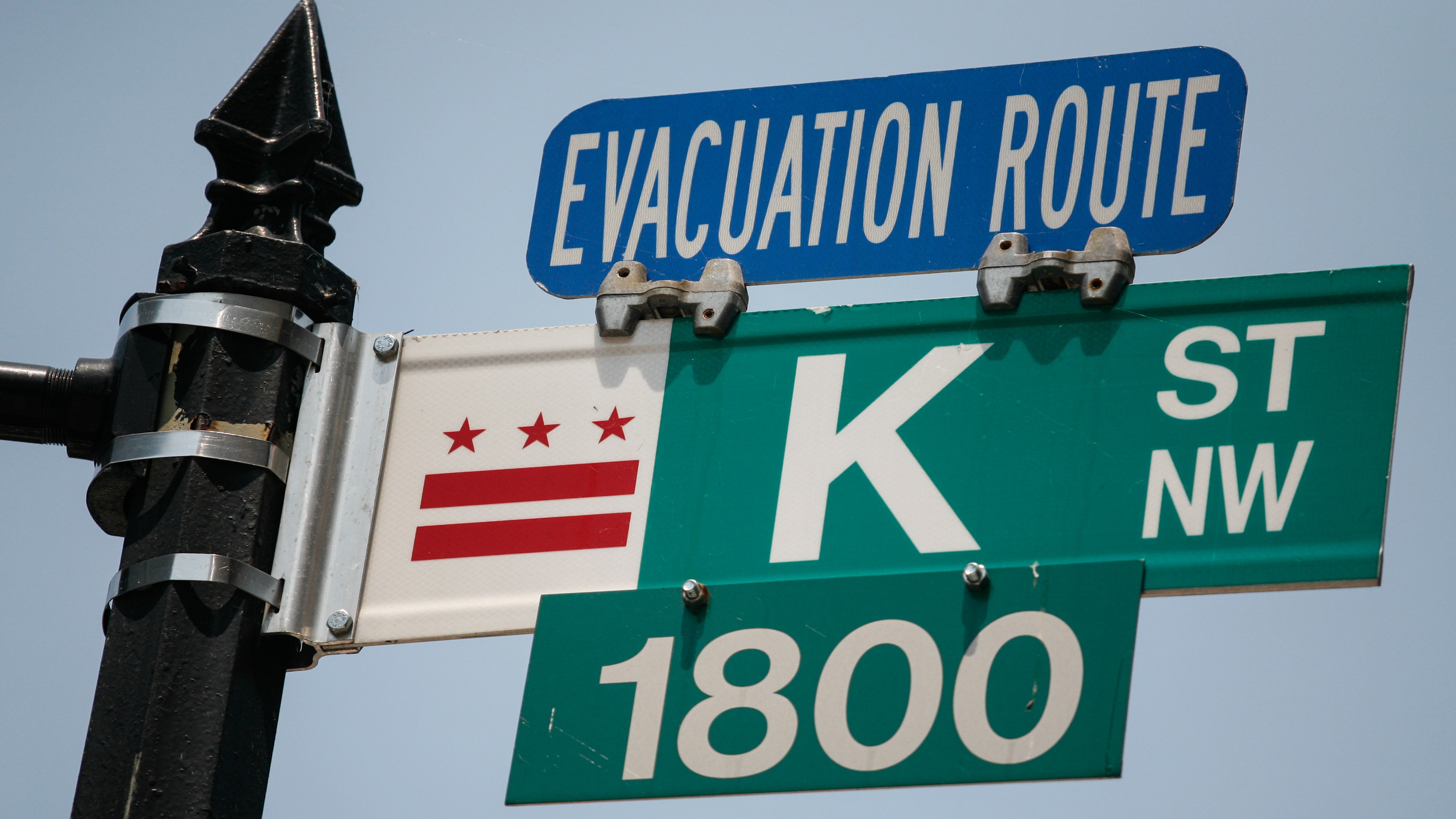

Lobbying hit a third-quarter record of nearly $1.3 billion. Some of the biggest checks came from the industries whose prices drive your premiums.
corporatocracy (noun) — a system of government in which corporations, financial institutions, or other business entities hold effective political power, either by directly controlling the state or by exerting decisive influence over the officials and institutions that do.
Washington spent the summer gridlocked and campaigning. K Street spent it cashing checks.
Lobbying spending approached $1.3 billion in the third quarter of 2026, the highest third-quarter total since Congress began requiring quarterly lobbying reports in 2008, according to an OpenSecrets analysis of federal disclosures. Through the first nine months of the year, the total reached nearly $4.1 billion. That keeps 2026 on pace to extend a streak of lobbying spending increases every year since 2016.
To be precise: the third quarter was up 2.1%, about $26.8 million, from the same period last year. Adjusted for inflation, it was down 1.8%. But in raw dollars, nobody has ever spent more in a third quarter to be heard in Washington.
Who's getting paid
The biggest winner was Ballard Partners, the firm run by longtime Trump fundraiser Brian Ballard. White House Chief of Staff Susie Wiles worked there before joining the administration. Ballard reported a record $34.9 million in third-quarter lobbying revenue, up nearly 40% from a year earlier, and about $98 million through the first nine months.
How that money works. That revenue is fees: what companies, trade groups, universities, and foreign interests pay Ballard to make their case in Washington. Clients have ranged from Netflix to Harvard. After Trump's election, Ballard signed more than 200 new federal lobbying clients in 2025, who paid the firm roughly $55.6 million. Many had foreign ties.
New Ballard clients have come from Saudi Arabia, South Korea, Albania, Uzbekistan, and more, according to the watchdog site Sludge. In the first three months of 2026, Ballard held four of the 11 largest lobbying contracts in Washington, thanks to pricey work for foreign clients, Bloomberg reported. One example: Bancrédito, a Puerto Rican bank founded by Julio Herrera Velutini, whom Bloomberg described as embroiled in corruption and money-laundering scandals. The bank paid Ballard $630,000 in the last two months of 2025, while Ballard lobbied the White House on "banking regulatory restrictions and requirements." In the first quarter of 2026, lawyers representing Herrera Velutini paid Ballard another $630,000, though the firm reported no registrable lobbying work for it.
What are they paying for? Access, mostly. Ballard's own third-quarter filing listed one issue for Brian Ballard and a firm partner as simply: "Introduction to government officials."
The open book has missing pages. Lobbying firms must report every client, roughly what each paid, and which issues, bills, and agencies they worked on. Anyone can look it up. What they don't report: who they met with, what was said, or the "consulting" fees for work that doesn't count as lobbying. That part of the book stays closed.
The Democratic side of the door
The door swings both ways, but right now it swings much wider for one side. LegiStorm sorts lobbying firms by the past political jobs of their lobbyists, mostly in Congress. In the third quarter, it counted just over 500 Republican-leaning firms, which brought in more than $225 million. Nearly 350 Democratic-leaning firms brought in roughly $61.5 million. The top three Republican-leaning firms out-earned every Democratic-leaning firm combined.
The top Democratic-leaning firm, Avenue Solutions, earned $2.07 million from nearly 40 clients, its best quarter since 2022. It was the only Democratic-leaning firm to top $2 million.
That gap reflects who holds power, not who holds principles. When Democrats won both chambers of Congress in 2006, corporations that had boasted about their Republican ties started hiring Democratic lobbyists, and drug and oil companies kept their Republican lobbyists too. Democrats won both chambers again on November 3 and will take control when the new Congress is sworn in on January 3. Watch those numbers flip. The money doesn't pick a party. It picks whoever holds the gavel.
Who's paying
The biggest single spender wasn't a drug company or a defense contractor. It was the National Association of Realtors, which spent $27.4 million in the third quarter alone, nearly 2.5 times what it spent a year earlier. It has spent more than $57 million this year, passing the U.S. Chamber of Commerce as Washington's top lobbying client.
A housing law they already got. The Realtors call the 21st Century ROAD to Housing Act this quarter's "crown jewel" and "the culmination of two years of persistent NAR lobbying." It's the most comprehensive overhaul of federal housing policy in more than three decades. Republicans Tim Scott and French Hill championed it with Democrats Elizabeth Warren and Maxine Waters, and it passed the Senate 85-5 and the House 358-32. President Trump was scheduled to sign it, but never did. It became law on July 11 without his signature.
The law has 59 sections: grants to encourage local permitting reform, faster environmental reviews for small housing projects, looser rules for factory-built homes, and a ban on big investors (those owning 350 or more homes) buying up more single-family houses. Dozens of industry groups fought that last part, warning it would choke off new rental construction. The libertarian Cato Institute called it a "dangerous precedent" that won't lower prices.
Will it make your house cheaper? Most of it won't be felt for years. Even the Realtors say implementation, from grant funding to rulemaking, will take years. What's certain today is who's taking credit for it.
A tax break that means more sales. Now the Realtors are pushing the More Homes on the Market Act, which would double the tax-free profit on a home sale to $500,000 for individuals and $1 million for married couples. The pitch is that it would free up housing for buyers. It would also mean more homes changing hands, and real estate agents get a commission on every one. The Realtors are eyeing the lame duck, a tax bill, executive action, or the next Congress to get it done.
The Realtors' political action committee is backing 429 candidates. It says it picks them by issue, "not party affiliation." "Housing affordability isn't a red or blue issue," says Shannon McGahn, the Realtors' chief advocacy officer. Neither is a commission check.
AI money pours in, and you pay the power bill
Some of K Street's most dramatic growth this year came from artificial intelligence companies. Anthropic has spent $5.6 million on lobbying this year, and OpenAI nearly $3.8 million, both with their biggest third quarters ever. Chipmaker Nvidia spent $2.2 million in the third quarter alone, its largest quarter on record.
That's little money next to the Realtors. But look at what the AI boom already gets from the public.
Tax breaks. About 36 states now offer subsidies written specifically for data centers, mostly exemptions from sales tax on servers, chips, and equipment. The costs have exploded far past what anyone promised. Ohio projected its data center tax break would cost $136 million in 2025. It cost more than $1.5 billion, almost 12 times the forecast, and Gov. Mike DeWine suspended it. Virginia's cost about $1.6 billion in fiscal 2025. Texas lost $1 billion due to its data center sales tax exemption in fiscal 2025 alone, and the state reports company names but not how much each company received.
The few states that have calculated their return found they lose 52 to 70 cents for every dollar they give away, according to Good Jobs First.
Your electric bill. In the 13-state PJM grid that runs from Illinois to New Jersey, the grid's independent market monitor estimates data centers have cost its 67 million ratepayers about $29 billion in capacity charges over roughly the past two years. One estimate puts the hit for Maryland households at roughly $168 to $216 a year. A Harvard and Wharton study from 2020 to 2025 found that data centers accounted for a much smaller share of household price increases nationwide, about 4%. Researchers in the field caution that past studies miss the latest wave of AI data centers, and in the PJM region, higher bills are already here.
Texas has its own fight. Requests to plug data centers into the state grid hit 474 gigawatts this year, about five times the state's peak demand, and Gov. Greg Abbott ordered an audit of data center projects before any more connect. (More on that in a Dispatch later this week.)
Here's the corporatocracy in one sentence: some of the richest companies on earth get tax breaks on the equipment, while households absorb the cost of the grid built to power it. If a company can afford a multibillion-dollar data center full of chips, it can afford its own electricity and water. Families shouldn't be underwriting it through their utility bills and their state budgets.
Which brings us to health care.
Speaking of health-care lobbying
For years, the drug industry has spent more on lobbying than any other industry: every quarter but one from 2010 through mid-2025, according to OpenSecrets. In the third quarter of 2026, PhRMA, the trade group for brand-name drugmakers, spent $7.1 million.
In the first half of the year, according to a Washington Post analysis of disclosures:
- PhRMA: $19.57 million
- American Medical Association: $13.1 million
- American Hospital Association: $10.55 million
- AHIP, the health insurers' trade group: $8.33 million
Pharmaceutical companies and related groups accounted for 42 of the 100 largest health-care lobbying spenders.
Here's the honest part: several of those groups actually spent less than they did last year. The hospital association was down 20%, and PhRMA and AHIP were each down 6%. Health-care lobbying didn't need to grow. It's already among the biggest operations in Washington, and it has been for years.
Meanwhile, your premium
While those checks were being written, here's what happened to the people paying the bills:
- Job-based coverage: The average family premium reached $28,303 in 2026, up 5%, according to KFF's annual employer survey. Workers' share rose 9%, to $7,471. That's faster than wages (up 3.7%) and inflation (up 2.7%).
- Next year: Aon forecasts employers' health costs will jump 9.5% in 2027.
- Small businesses: Nearly 300 insurers proposed a median 14% increase for small-group plans in 2027.
- The ACA marketplace: Insurers proposed a median 15% increase for 2027, after a 20% increase in 2026. If it holds, marketplace premiums will be up by a third in two years.
And the premium is only the cover charge. Before your insurance pays much of anything, you pay the deductible:
- Job-based plans: The average deductible for single coverage hit $1,955 in 2026, and $2,624 at small firms, according to KFF.
- The marketplace: The average deductible reached a record $3,786 in 2026, up 37% from the year before, largely because more people moved from silver plans to bronze plans. The average bronze deductible: $7,186.
- The out-of-pocket maximum: The most a plan can require you to pay in a year for in-network care rises to $12,000 for an individual and $24,000 for a family in 2027. That's up from $10,600 and $21,200 this year, a 13% jump in a single year.
Here's the trick. That cap is tied to a formula that determines how fast premiums grow. So when premiums climb, your maximum exposure climbs automatically too. And a higher deductible lets a plan advertise a lower premium. The cost doesn't go away. It just moves from the price tag to the moment you get sick. You pay either way, and you pay the most when you can least afford it.
Why do premiums climb so fast every year?
Insurers aren't hiding the answer. KFF's review of 2027 rate filings found that rising health-care prices remain the primary driver. Insurers also cite more people using care, costly drugs, labor shortages, and, in the marketplace, the expiration of enhanced premium tax credits at the end of 2025, which insurers expect will push healthier people out and leave a sicker, costlier pool behind.
The highest price is the hospital bill. RAND found that in 2022, employers and private insurers paid hospitals an average of 254% of what Medicare would have paid for the same services. For outpatient hospital care, it was 289%. RAND also found that a hospital's market power, rather than the number of Medicare or Medicaid patients it serves, best predicted its prices.
There's also a structural reason premiums rarely stop rising. Under the Affordable Care Act, insurers must spend 80% to 85% of premiums on care. That caps their slice as a percentage. But a percentage of a bigger number is a bigger number. Critics argue that gives insurers little reason to fight rising costs.
Two prices for the same MRI
Ask a hospital what an MRI costs and you may get two answers: one for people with insurance, and a much lower one for people paying cash. That isn't a rumor. Since 2021, a federal rule has required hospitals to publish both.
When Johns Hopkins researchers studied those prices at more than 2,300 hospitals, using 2022 data, they found the cash price was lower than the median insurance-negotiated rate 47% of the time, for the same procedure, at the same hospital, in the same setting. Hospitals typically set both as discounts off their "chargemaster," a master price list each hospital sets on its own. The study notes chargemaster prices average more than four times the actual cost of care.
Think about what that means. You pay a premium every month so your insurer can "negotiate" for you, and in nearly half the cases studied, the hospital's cash price for a stranger off the street was lower than the typical rate insurers negotiated.
Part of the reason is paperwork. Billing insurers is expensive. Studies of U.S. health spending put administrative costs at 15% to 30% of all health spending, and at least half of that is considered waste. One California study found doctors' offices spent 14% of their income on insurance paperwork, and hospitals 9%. Cash at the counter costs them almost nothing.
There should be one posted price for a service, the same whether you pay with an insurance card or a debit card. Insurers and hospitals both profit from the complexity. The insurance industry, which created most of the paperwork, should lead the way in simplifying it.
Where the lobbying meets your premium
No disclosure report says "we spent this so your premium would go up," and I'm not claiming any lobbyist bought a premium hike. What the record does show is which reforms the biggest spenders are fighting.
Site-neutral payment. Today, Medicare often pays more for the same service, such as an injection or a scan, when it's done in a hospital-owned outpatient clinic than in an independent doctor's office. Momentum has been building in Congress to pay the same price for the same care. This year, the American Hospital Association told Congress it "strongly opposes efforts to expand site-neutral payment cuts" and urged lawmakers to "reject so-called site-neutral payment policies." The AHA says the cuts would threaten access to care, especially in rural and underserved communities. Broad site-neutral reform still hasn't passed.
The subsidies. Here's where health-care lobbying and the Democrats meet. In July 2025, a coalition of insurers, hospitals and doctors, including AHIP and the American Medical Association, wrote to congressional leaders: "If Congress fails to extend the tax credit, the cost of health insurance will explode." In early 2025, insurers and hospital groups increased their lobbying, citing the expiring credits and threatened Medicaid cuts. Democrats made the extension their central demand in the fall 2025 government shutdown. Republican leaders refused, and the enhanced credits expired at the end of 2025. In January, the House passed a three-year extension by a vote of 230 to 196, with 17 Republicans joining Democrats. Senate Majority Leader John Thune said there was "no appetite" for it, and it went nowhere.
Notice what neither side's plan does. The subsidy doesn't lower the price of a hospital stay. It changes who pays it. With the subsidy, taxpayers cover more of the premium, and the insurer still gets paid. Without it, families cover more, and some drop coverage. Either way, the price underneath keeps climbing. The industry was happy to lobby for the version where the government keeps paying. It lobbies against reforms that would cut prices.
Pharmacy middlemen. Congress did pass reforms of pharmacy benefit managers in February, as part of the Consolidated Appropriations Act of 2026. But even that shows how the game is played. The PBM industry's own trade group called one key provision "Big Pharma's Big Win" and warned it will mean higher premiums for seniors. Supporters say it removes the middlemen's incentive to favor drugs with high list prices. When two lobbying giants fight over a bill, the question is never whether an industry wins. It's which one.
Congress held hearing after hearing on health-care affordability this year. Leaders in both parties say costs are too high. And the reforms most likely to bring prices down keep running into the same wall of lobbyists.
Why this matters now
Open enrollment is happening right now. Millions of Americans are looking at their 2027 premiums this month and doing the math at the kitchen table.
At the same time, the lame-duck Congress is in session through January 3, and as Friday's Dispatch showed, some of the members voting are already lining up their next jobs on K Street. A new Democratic majority takes over after that. K Street has already budgeted for both. The question is whether voters will be in the room too.
Call to Action
- Call your senators and representatives through the U.S. Capitol Switchboard at (202) 224-3121. Ask where they stand on site-neutral payment, paying the same price for the same care, and whether they'll vote for it.
- Ask who funds them. Look up your members' top donors by industry at OpenSecrets.org. If hospitals, drugmakers, or insurers are near the top, ask your member about it directly.
- Shop your plan. If you buy coverage on HealthCare.gov or through work, compare plans before the deadline instead of letting your current plan auto-renew at a higher price.
- Ask for the cash price before any scan, lab test, or routine procedure, and compare it with what you'd owe through your insurance. If you're paying yourself, ask for a written Good Faith Estimate.
- Ask your employer for the hospital prices your plan pays. Federal transparency rules require insurers to post negotiated rates. Employers who see the numbers can push back.
Sources
- Arkansas Advocate (States Newsroom) / OpenSecrets, "Congressional lobbying spending hits high, remains on pace for another record year" (Nov. 15, 2026). https://arkansasadvocate.com/2026/11/15/congressional-lobbying-spending-hits-high-remains-on-pace-for-another-record-year/
- Bloomberg Government, "Post-Midterm Elections Planning Keeps Lobbying Revenues Red Hot" (Oct. 2026). https://news.bgov.com/bloomberg-government-news/post-midterm-elections-planning-keeps-lobbying-revenues-red-hot
- CBS News, "Susie Wiles' old lobbying firm made $186 million under Trump" (Nov. 2026). https://www.cbsnews.com/news/susie-wiles-ballard-partners-trump-maga-feud/
- LegiStorm, "GOP lobbying dominance persists ahead of midterms" (Oct. 26, 2026). https://www.legistorm.com/pro_news/4489/gop-lobbying-dominance-persists-ahead-of-midterms.html
- The Fulcrum / OpenSecrets, "Pharma Industry and Ballard Partners Dominate the Lobbying Space in Second Quarter of 2025." https://thefulcrum.us/governance-legislation/pharma-industry-legislation
- Becker's Hospital Review, "Healthcare's top lobbying spenders in 2026 so far" (July 22, 2026), citing a Washington Post analysis. https://www.beckershospitalreview.com/finance/healthcares-top-lobbying-spenders-in-2026-so-far/
- Healthcare Finance News, "Family health premiums top $28,000 as worker contributions rise 9%" (Oct. 2026), on KFF's 2026 Employer Health Benefits Survey. https://www.healthcarefinancenews.com/news/family-health-premiums-top-28000-worker-contributions-rise-9
- CNN, "Getting health insurance from your job will be extra pricey for 2027" (Oct. 22, 2026). https://www.cnn.com/2026/10/22/economy/health-insurance-cost-increase-2027
- KFF, "How Much and Why Premiums Are Going Up for Small Businesses in 2027." https://www.kff.org/health-costs/how-much-and-why-premiums-are-going-up-for-small-businesses-in-2027/
- KFF, "How Much and Why ACA Marketplace Premiums Are Going Up in 2027" (Aug. 3, 2026). https://www.kff.org/affordable-care-act/how-much-and-why-aca-marketplace-premiums-are-going-up-in-2027/
- Fierce Healthcare, "Insurers propose a median ACA rate hike of 15% for 2027: KFF." https://www.fiercehealthcare.com/payers/aca-plans-set-another-year-premium-spikes-preliminary-filings-show
- Healthcare Dive, RAND hospital price study (2024). https://www.healthcaredive.com/news/hospitals-charge-employers-insurers-more-Medicare-Rand/715943/
- Healthcare Innovation, "RAND study confirms higher reimbursement from private payers." https://www.hcinnovationgroup.com/policy-value-based-care/news/55039834/rand-study-confirms-higher-reimbursement-from-private-payers
- American Hospital Association, statement to House Budget Committee (Jan. 21, 2026). https://www.aha.org/testimony/2026-01-21-aha-statement-house-budget-committee-health-care-affordability-hearing
- American Hospital Association, statement on House Ways and Means affordability hearing (April 28, 2026). https://www.aha.org/testimony/2026-04-28-aha-statement-house-ways-and-means-affordability-hearing-hospital-ceos
- KFF, "What to Know About Pharmacy Benefit Managers (PBMs) and Federal Efforts at Regulation" (Feb. 9, 2026). https://www.kff.org/other-health/what-to-know-about-pharmacy-benefit-managers-pbms-and-federal-efforts-at-regulation/
- PCMA, "Inside PBM Reform: Big Pharma's Big Win on 'Delinking'" (April 27, 2026). https://www.pcmanet.org/pcma-blog/inside-pbm-reform-big-pharmas-big-win-on-delinking/
- U.S. Senate, "Contacting U.S. Senators" (Capitol Switchboard). https://www.senate.gov/senators/senators-contact.htm
- Bloomberg Law, "Lobbying Spending Splurge Rockets Trump-Linked Firm to the Top" (Jan. 21, 2026). https://news.bloomberglaw.com/privacy-and-data-security/lobbying-spending-splurge-rockets-trump-linked-firm-to-the-top
- Sludge, "Foreign interests are paying millions to a Trump-linked lobbying firm" (Feb. 5, 2026). https://readsludge.com/2026/02/05/foreign-interests-are-paying-millions-to-a-trump-linked-lobbying-firm/
- Sludge, "K Street's Trump boom" (Feb. 13, 2026). https://readsludge.com/2026/02/13/k-streets-trump-boom/
- U.S. Right to Know, "Ballard Partners: Lobbying for tobacco, pesticide, alcohol, and chemical interests" (Nov. 2026). https://usrtk.org/healthwire/ballard-partners-lobbying-for-tobacco-pesticide-alcohol-and-chemical-interests-in-trumps-washington/
- NBC News / Washington Post, "Democrats' victory felt on K Street" (2006). https://www.nbcnews.com/news/amp/wbna15843329
- Becker's Payer Issues, "'The cost of health insurance will explode': Insurers, hospitals urge ACA tax credit extension" (July 2025). https://www.beckerspayer.com/payer/aca/the-cost-of-health-insurance-will-explode-insurers-hospitals-urge-aca-tax-credit-extension/
- Axios Pro, hospital and insurer lobbying on Medicaid and ACA subsidies (April 22, 2025). https://www.axios.com/pro/health-care-policy/2025/04/22/lobbying-medicaid-cuts-aca-subsidies
- ABC News, "17 House Republicans vote with Democrats to extend Obamacare subsidies for 3 years" (Jan. 8, 2026). https://www.goodmorningamerica.com/news/story/house-vote-obamacare-subsidies-extension-after-9-republicans-129026545
- Bloomberg Government, "Realtors Top K Street Spending, AI Companies Smash Records" (Oct. 2026). https://news.bloomberglaw.com/bloomberg-government-news/realtors-top-k-street-spending-while-ai-companies-smash-records
- Inman, "NAR's Shannon McGahn On The Midterms: 'Our Priorities Stay The Same'" (Nov. 3, 2026). https://www.inman.com/2026/11/03/nar-shannon-mcgahn-legislation-lobbying-political-action-agenda/
- National Association of Realtors, "NAR's Q3 Strategic Plan Update Just Dropped" (Nov. 2026). https://www.nar.realtor/news/real-estate-news/nars-q3-strategic-plan-update-just-dropped-we-were-very-successful-advancing-housing-legislation
- CooperatorNews, "From Stalled Bill to Landmark Law: The 21st Century ROAD to Housing Act." https://cooperatornews.com/article/the-21st-century-road-to-housing-act
- Congressional Research Service, "The 21st Century ROAD to Housing Act (P.L. 119-101)" (Sept. 17, 2026). https://www.congress.gov/crs_external_products/R/PDF/R49354/R49354.1.pdf
- Alianza Americas, "The 21st Century ROAD to Housing Act." https://www.alianzaamericas.org/tool/the-21st-century-road-to-housing-act
- Brownstein Hyatt Farber Schreck, "Congress Enacts the 21st Century ROAD to Housing Act" (Oct. 2026). https://www.bhfs.com/insight/congress-enacts-the-21st-century-road-to-housing-act-what-home-builders-developers-and-owners-need-to-know/
- Congressional Research Service, "Institutional Investors and Single-Family Housing: In Brief." https://www.congress.gov/crs-product/R49015
- Real Estate News, "Dozens of industry groups take issue with housing bill provision" (March 27, 2026). https://www.realestatenews.com/2026/03/27/dozens-of-industry-groups-take-issue-with-housing-bill-provision
- Cato Institute, "There and Back Again: The 21st Century ROAD to Housing Act." https://www.cato.org/blog/there-back-again-21st-century-road-housing-act
- Good Jobs First, "Cloudy Data, Costly Deals: How Poorly States Disclose Data Center Subsidies." https://goodjobsfirst.org/cloudy-data-costly-deals-how-poorly-states-disclose-data-center-subsidies/
- Good Jobs First, "Most States Fail to Disclose which Data Center Companies Get Huge Tax Breaks." https://goodjobsfirst.org/most-states-fail-to-disclose-which-data-center-companies-get-huge-tax-breaks/
- Good Jobs First, "Ohio Data Center Tax Break Costs Nearly $1.6 Billion" (2026). https://goodjobsfirst.org/ohio-data-center-tax-break/
- Popular Information, "How data centers are blowing a hole in state budgets" (June 10, 2026). https://popular.info/p/how-data-centers-are-blowing-a-hole
- NPR, "AI data centers: How much are ratepayers on the hook for?" (Oct. 1, 2026). https://www.npr.org/2026/10/01/nx-s1-5984949/data-centers-ai-ratepayers-congress
- FactCheck.org, "Data Centers and Electricity Prices: It's Not as Simple as Voters May Think" (Oct. 2026). https://www.factcheck.org/2026/10/data-centers-and-electricity-prices-its-not-as-simple-as-voters-may-think/
- Data Centre Central, summary of Harvard Business School / Wharton study on data centers and household power prices (Nov. 2026). https://datacentrecentral.substack.com/p/data-centers-explain-just-4-of-rising
- Heatmap News, "What a Bluer Texas Means for Energy and Data Centers" (Nov. 2026). https://heatmap.news/politics/hinojsas-win-data-centers
- Bloomberg Law, "Trump-Linked Lobbyists Land Big Money, Foreign Client Contracts" (April 29, 2026). https://news.bloomberglaw.com/ip-law/trump-linked-lobbyists-land-big-money-foreign-client-contracts
- choice.healthcare, citing KFF 2026 Employer Health Benefits Survey deductibles. https://choice.healthcare/blog/health-insurance-premiums-deductibles-and-out-of-pocket-costs-a-plain-english-guide/
- Carson Health Advisor, citing KFF and Peterson-KFF marketplace deductibles (2026). https://carsonhealthadvisor.com/what-is-a-good-deductible-health-insurance
- The Horton Group, "Cost-Sharing Limits Revised for 2027 Plan Years" (HHS, Jan. 29, 2026). https://www.thehortongroup.com/resources/cost-sharing-limits-revised-for-2027-plan-years/
- BenefitsUSA, "ACA Out-of-Pocket Maximum 2027." https://benefitsusa.org/en/blog/aca-out-of-pocket-maximum-2027-projections
- Health Affairs, Wang et al., "The Relationships Among Cash Prices, Negotiated Rates, And Chargemaster Prices For Shoppable Hospital Services" (April 2023). https://www.healthaffairs.org/doi/pdf/10.1377/hlthaff.2022.00977
- BenefitsPRO, "Cash prices often lower than negotiated rates, study finds" (April 11, 2023). https://benefitspro.com/2023/04/11/hospital-typically-set-cash-and-negotiated-prices-as-percentage-of-chargemaster-fees-study-finds/
- Health Affairs, research brief on administrative waste and excess health spending (2022). https://www.healthaffairs.org/do/10.1377/hpb20220909.830296/full/
- UCSF / Health Affairs, Kahn et al., billing and insurance-related costs study (2005). https://www.ucsf.edu/news/2005/11/101530/study-finds-billions-health-insurance-dollars-used-administrative-costs
- Forbes, "Texas Orders Data Center Audit As Grid Requests Reach 474 Gigawatts" (Oct. 13, 2026). https://www.forbes.com/sites/daraabasiita/2026/10/13/texas-orders-data-center-audit-as-grid-requests-reach-474-gigawatts/
- Scripps News / Associated Press, "Democrats will win control of US House, retaking control from Republicans" (Nov. 2026). https://www.scrippsnews.com/politics/america-votes/democrats-will-win-control-of-us-house-retaking-control-from-republicans
- Al Jazeera, "Democratic Party gains US House majority in 2026 midterm elections" (Nov. 4, 2026). https://www.aljazeera.com/news/2026/11/4/democratic-party-gains-us-house-majority-in-2026-midterm-elections
- CMS, "Good Faith Estimate and Patient-Provider Dispute Resolution Process for Uninsured (or Self-Pay) Individuals." https://www.cms.gov/cciio/resources/regulations-and-guidance/downloads/good-faith-estimate-patient-provider-dispute-resolution-process-for-uninsured-or-self-pay-individuals.pdf
- AJMC, "PBM Reforms Signed Into Law, Reshaping Medicare Part D Drug Pricing Transparency" (2026). https://www.ajmc.com/view/pbm-reforms-signed-into-law-reshaping-medicare-part-d-drug-pricing-transparency
- New Jersey Monitor / States Newsroom, "US House backs extension of health insurance subsidies after Dems force vote" (Jan. 8, 2026). https://newjerseymonitor.com/2026/01/08/repub/house-health-insurance-subsidies-extension/
- HFMA, "Congress seems inclined to expand site-neutral payment policies in Medicare" (2026). https://www.hfma.org/payment-reimbursement-and-managed-care/medicare-payment-and-reimbursement/congress-seems-inclined-to-expand-site-neutral-payment-policies/
- V64OTD, "Fired by Voters, Hired by Lobbyists: Inside the Lame-Duck Job Fair" (Nov. 13, 2026). https://v64otd.com/dispatch/fired-by-voters-hired-by-lobbyists-lame-duck-job-fair/