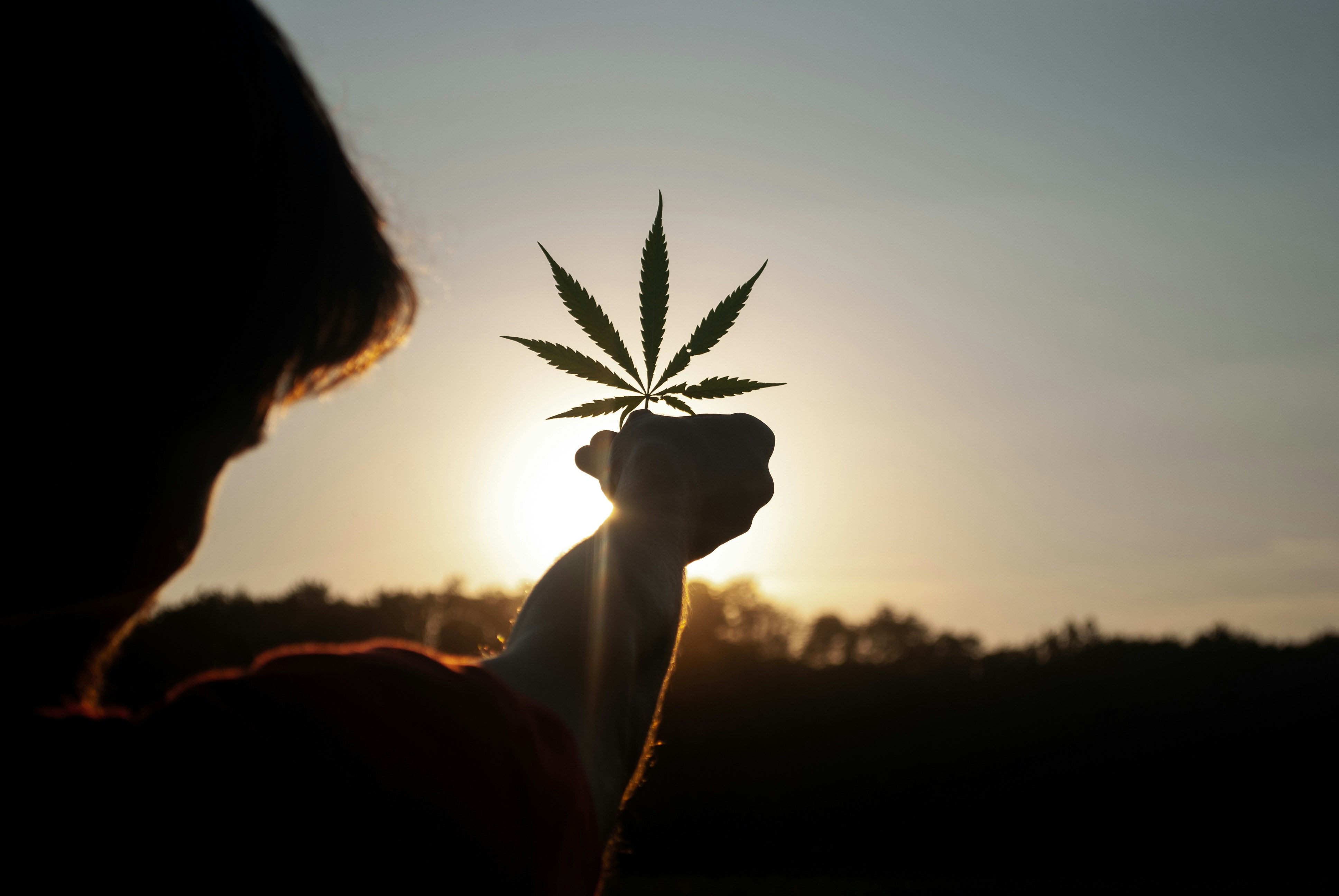

Big Beer, licensed marijuana companies, and the hemp industry all paid to write the rules on THC. The federal hemp ban hits December 11, and the people with the most to lose- chronic pain patients looking for something besides opioids- are the only ones nobody paid to represent.
corporatocracy (noun) — a system of government in which corporations, financial institutions, or other business entities hold effective political power, either by directly controlling the state or by exerting decisive influence over the officials and institutions that do.
lobbying (noun) — the legal practice of individuals, companies, or interest groups paying professionals, or acting themselves, to influence the decisions of lawmakers, regulators, and other public officials; protected as the right to petition government, and disclosed only in part.
Congress comes back to work today. In 32 days, on December 11, a federal law takes effect that turns most hemp THC products sold in America into illegal drugs. The gummies at the corner store, the THC seltzer in the cooler, the vape at the smoke shop- gone, unless Congress acts first.
How that law got written is a lesson in who really writes the rules in Washington and Austin. Spoiler: it isn't you.
How we got here
In 2018, Congress passed a farm bill that legalized hemp, cannabis with no more than 0.3% delta-9 THC by dry weight. The man who championed it was Senate Majority Leader Mitch McConnell, a Kentucky Republican. Within a few years, companies were using that definition to sell intoxicating products: delta-8, THCA flower, and drinks and gummies with real delta-9 THC, all technically "hemp." An industry grew out of it, mostly in gas stations, smoke shops, and liquor aisles, mostly without federal rules on age, testing, or labeling.
In November 2025, McConnell closed the door he had opened. Section 781 of the bill that ended the 43-day government shutdown redefined hemp. Any finished product with more than 0.4 milligrams of total THC per container, counting THCA, no longer counts as hemp. Synthetic cannabinoids were cut out too. For context, a typical THC seltzer carries 5 to 10 milligrams per can.
Nobody voted on hemp by itself. It rode inside a must-pass bill to reopen the government:
- Sen. Rand Paul (R-Ky.) offered an amendment to strip the hemp language. The Senate killed it, 76–24, on November 10, 2025. Texas split: Sen. Ted Cruz voted to keep Paul's amendment alive; Sen. John Cornyn voted to kill it.
- The full package passed the Senate 60–40 and the House 222–209. The president signed it November 12, 2025, starting a one-year clock.
- In September 2026, as that clock ran down, Congress passed another stopgap funding bill, H.R. 6500, that pushed the deadline for most products to December 11, 2026, the same day government funding runs out again. Synthetic cannabinoids still lose their hemp status this Thursday, November 12.
So the fate of a multibillion-dollar industry now rides on yet another shutdown deadline. Several bills would replace the ban with real rules, including a Texas-authored bill for hemp THC drinks, the Beverage Regulatory Parity Act from Rep. Beth Van Duyne (R-Irving) and Rep. Greg Landsman (D-Ohio). It would set a 5-milligram serving limit, a 21-and-over age floor, and federal alcohol-style oversight. As of last week, none had received a hearing.
Editorial: That's the Uniparty playbook. A Republican wrote the ban and slipped it into a bill both parties needed to reopen the government. The delay rode in another stopgap that passed the House 370–48, with both parties on board. Now the final call will ride in a third spending bill. No standalone vote, no hearing on the ban itself, no fingerprints.
What's at stake
Whitney Economics, a cannabis-industry research firm, estimates the hemp cannabinoid market at $38.7 billion. Its September 2026 report found the new rules could wipe out $28.3 billion in retail sales, displace 225,000 jobs, and cost states $2.1 billion in sales tax. Take those numbers as the industry's side of the case, but even a fraction of that is a lot of storefronts.
What hemp does for people who hurt
The ban debate has been about gas stations and gummies. It should be about the millions of Americans who live with chronic pain, and about what they'll reach for if this option disappears.
What the science says. In 2017, the National Academies of Sciences, Engineering, and Medicine reviewed the research and found "conclusive or substantial evidence" that cannabis or cannabinoids are effective for treating chronic pain in adults. That's the panel's top tier of evidence. A 2022 review in the Annals of Internal Medicine, covering 18 randomized trials, found that products high in THC relative to CBD produced a moderate short-term drop in chronic pain, with side effects like dizziness, sleepiness, and nausea.
What patients say. A 2016 University of Michigan survey of medical marijuana patients with chronic pain found cannabis use was associated with a 64% drop in their opioid use, a 45% improvement in quality of life, and fewer medication side effects. A 2023 study in JAMA Network Open surveyed 1,724 adults with chronic pain in states with medical cannabis programs. About 3 in 10 used cannabis for their pain, and more than half of those said it led them to use less prescription opioid, prescription non-opioid, or over-the-counter pain medicine.
What Texas already decided. Here's the part Washington ignores. In June 2025, the same month he vetoed the hemp ban, Gov. Abbott signed House Bill 46, which added chronic pain to the Texas Compassionate Use Program and allowed up to 10 milligrams of THC per dose. The FDA-approved THC pill, dronabinol, starts at 2.5 milligrams. The federal ban caps hemp products at 0.4 milligrams for the entire container. Texas says 10 milligrams is medicine. Washington says 0.4 is a drug.
Compare that to opioids. The National Academies found no or insufficient evidence linking cannabis use to overdose deaths. Opioids are another story. The opioid crisis has been linked to about 900,000 American deaths since 1999. Drug overdose deaths, driven mostly by opioids, peaked at nearly 110,000 in 2022 and were still about 73,000 in the 12 months ending August 2025. Much of it started in a boardroom. In 2020, Purdue Pharma, the maker of OxyContin, pleaded guilty to three federal felonies, admitting it paid doctors to write more prescriptions and misled the DEA. A federal judge approved a settlement in November 2025 under which the Sackler family, which owned Purdue, will pay up to $7 billion over 15 years. OxyContin stayed legal the whole time. Nobody went to prison.
The honest caveats. I promised you the full story, so here's the rest of it. The CDC estimates about 3 in 10 people who use cannabis have cannabis use disorder, and the risk is higher for people who start young or use heavy, high-potency products. A 2019 study in the Proceedings of the National Academy of Sciences found that an early link between medical marijuana laws and fewer opioid deaths disappeared, and even reversed, when more years of data were added, and the authors concluded the connection was likely a coincidence either way. And unregulated hemp has real problems: a study in the Journal of Medical Toxicology found delta-8 THC exposures reported to poison centers rose nearly 80% from 2021 to 2022, with more than half involving children.
Every one of those problems, from kids getting into gummies to products that don't match their labels, is an argument for age limits, child-resistant packaging, testing, and dose caps. None of them is an argument for pushing a pain patient back toward a pill bottle or a street dealer.
Follow the money: who paid for the ban
You'd think a ban on intoxicating products would be pushed by parents' groups and police chiefs. Some of it was: a bipartisan group of 35 state and territorial attorneys general wrote Congress in August 2026 urging lawmakers to reject "any effort to delay, repeal, suspend, or weaken" the ban, and prevention groups like Smart Approaches to Marijuana opposed any delay.
But look at who else was in the room.
Big Alcohol. In their third-quarter 2025 federal lobbying reports, filed while the ban was being written, Anheuser-Busch, Molson Coors, Diageo, Bacardi, Moët Hennessy, the Beer Institute, the Distilled Spirits Council, the Wine Institute, the National Beer Wholesalers Association, and the Wine and Spirits Wholesalers of America all listed hemp or THC as an issue they lobbied on. How much did each spend on hemp? You can't tell. Federal disclosure forms report a company's total lobbying, not what it spent on each issue. Remember that the next time someone tells you lobbying is "transparent."
It went further than Congress. On October 29, 2026, Politico reported on emails showing that lobbyists for Anheuser-Busch, Molson Coors and Diageo urged state attorneys general to sign that August letter. In a July email to North Dakota Attorney General Drew Wrigley, Anheuser-Busch lobbyist Todd Kranda wrote that "a couple fringe U.S. Senators" wanted to extend the "loophole." Wrigley signed the letter in August. So a letter that read like law enforcement speaking for public safety had beer-company lobbyists pushing for signatures.
To be fair, alcohol isn't one bloc, and its public line is more careful than its lobbying. The big trade groups told Congress to ban intoxicating hemp products at least until federal rules are written, rules they expect to look like their own. Total Wine & More, which sells THC drinks in some states, hired its first federal lobbyists in December 2025 to push for a regulated market, not a ban. The fight inside the liquor business isn't over whether you can buy THC. It's over who gets to sell it.
Big Marijuana. The other surprising ally of the ban was the legal marijuana industry. Licensed marijuana companies pay heavy state taxes and follow strict rules, while hemp shops sell similar highs down the street with neither. Bloomberg Government reported that the fight split the cannabis world, with marijuana companies lining up alongside longtime legalization opponents to close what they call the hemp "loophole."
Follow the money: who paid to save it
The hemp industry didn't sit still, and it spent, too.
- Team Hemp reported paying MO Strategies, the firm of longtime Republican operative Marty Obst, $550,000 to lobby from late 2025 through September 2026. Its reports list contacts with the House, the Senate, and the White House.
- Hemp Industry and Farmers of America reported $230,000 to one firm, S2R, in the first half of 2026 alone, and also retains a Kentucky firm founded by a former Kentucky secretary of state.
- The Hemp Beverage Alliance, the U.S. Hemp Roundtable, the National Association of Convenience Stores, and DoorDash all lobbied for a delay or regulation rather than a ban.
Then there's the family connection. In August 2026, The New York Times reported that the push for a delay was led in part by Bret Worley, who runs the hemp company MC Nutraceuticals and had recently married the daughter of White House Chief of Staff Susie Wiles. One of Worley's companies told clients it had a "seat at the table." The White House pushed Congress to include the delay. A spokesman said Wiles "has never lobbied in favor of this or any other position on hemp with Capitol Hill," and that Worley had nothing to do with the president's position. Republican senators were furious: Sen. Tom Cotton (R-Ark.) confronted the White House's top liaison over "gas station marijuana candy," and Sen. Ted Budd (R-N.C.) tried to strip the delay out. Weeks later, it passed anyway.
The Texas version
Texas ran the same play a year earlier, at the state level.
The ban side. Lt. Gov. Dan Patrick made banning THC his priority in 2025, and the Legislature passed Senate Bill 3. Patrick's campaign took $275,000 from Silver Eagle Distributors, a Houston-area beer distributor, according to a June Texas Ethics Commission filing reported by Marijuana Moment. Texas Original, one of the state's few licensed medical marijuana companies, hired Logan Spence, Patrick's former chief of staff, as a lobbyist in 2023 and has paid him at least $208,700 and possibly more than $417,000, based on Texas lobby filings, which report pay only in ranges. And Attorney General Ken Paxton has taken at least $509,806 from alcohol-industry PACs and executives since 2014, according to a Marijuana Moment review of campaign records.
The conservative side. Gov. Greg Abbott vetoed SB 3 on June 22, 2025, saying it would not survive a court challenge, and later ordered age limits and ID checks by executive order instead. The Houston Chronicle found that about a week after the veto, an entity tied to the CEO of the hemp company Mood gave Abbott's campaign $100,000. In August, Smoking Leaf Holdings gave House Speaker Dustin Burrows' campaign $50,000, the paper reported. The industry met with Abbott behind the scenes and paid for polls, including one by President Trump's pollster, showing the ban was unpopular with Republican voters.
The Texas twist. Patrick lost his reelection bid on November 3 to Democrat Vikki Goodwin, according to unofficial results. Goodwin accused him of letting alcohol money drive the ban and said she favors "treating THC like alcohol." The state's own hemp rulemaking at the Texas Alcoholic Beverage Commission closes public comment today. And come December 11, the federal ban applies no matter what Texas decides, unless Congress acts.
Was anybody "paid off"?
Here's where I stop. I don't make assumptions, and I'm not going to tell you a donation bought a vote or a veto. Proving that takes evidence nobody has shown.
What I can show you is the appearance, and it's ugly on both sides:
- Beer-company lobbyists urged attorneys general to back a ban that would wipe out their clients' competition.
- A governor's campaign got $100,000 from an entity tied to a hemp CEO about a week after the veto that saved that industry.
- A lieutenant governor who championed the ban took $275,000 from a beer distributor.
- A licensed medical marijuana company paid the lieutenant governor's former chief of staff to lobby while it backed a ban that would wipe out its unlicensed competition.
- The White House chief of staff's new son-in-law helped lead the push for a delay the White House then backed.
That's not a conspiracy. It's the system working exactly as designed. When the government holds the power to decide which products are legal, every company with a stake has to pay to play, either to get the rule written or to stop it from being written. The money doesn't decide every outcome. It decides who gets heard.
What should happen
I've said it before: legalize marijuana, regulate it, tax it, sell it in liquor stores to adults, enforce the DUI laws hard, and bust the dealers selling to kids. Hemp THC should live under the same rules: age limits, testing, honest labels, serving limits. That's the regulated-market approach in bills like Van Duyne's, and it's what most of the hemp industry now says it wants.
What we shouldn't do is what we did in 1919. As I wrote in Part 5 of The Faction Files, Prohibition didn't stop Americans from drinking. It handed the business to people who didn't check IDs, didn't test their product, and didn't pay taxes. A 0.4-milligram ban doesn't make THC disappear. It moves it from a store that cards your kid to a guy who doesn't.
Editorial: Notice who wins under a ban: the beer giants lose a competitor, the licensed marijuana companies lose a competitor, and the cartels gain a market. Notice who loses: the corner store, the farmer, the chronic pain patient who found something that works without an opioid, and the adult who'd rather have a THC seltzer than a beer. When the people writing the rules are funded by the companies those rules protect, the rules will protect the companies. Both parties built this. Both parties can fix it, with a real vote on real regulation, out in the open, before December 11.
Call your member of Congress this week. Ask one question: will you vote for regulation, or let the ban take effect inside another shutdown bill? If you're in North Texas, thank Rep. Beth Van Duyne for putting a regulation bill for hemp drinks on the table, and ask her colleagues to give it a hearing.
Sources
- Arnold & Porter, "Major Changes to Federal Regulation of Hemp-Derived Products" (Dec. 2025). https://www.arnoldporter.com/en/perspectives/advisories/2025/12/major-changes-to-federal-regulation-of-hemp-derived-products
- Texas Hemp Business Council, "Understanding the Federal Hemp Ban: What Happened and What Comes Next" (Nov. 14, 2025). https://texashempbusinesscouncil.com/understanding-the-federal-hemp-ban-what-happened-and-what-comes-next/
- The Marijuana Herald, "U.S. Senate Rejects Amendment to Remove Hemp Ban From Shutdown-Ending Spending Bill" (Nov. 2025). https://themarijuanaherald.com/2025/11/us-senate-hemp/
- Akerman LLP, "Congress Approves One-Month Delay of Federal Hemp THC Restrictions" (Sept. 2, 2026). https://www.akerman.com/en/perspectives/congress-approves-one-month-delay-of-federal-hemp-thc-restrictions.html
- NACS, "House Votes to Delay Hemp Ban" (Sept. 2, 2026). https://convenience.org/stay-current/news/2026/september/2/house-votes-to-delay-hemp-ban
- Whitney Economics, "Whitney Economics Releases U.S. Hemp Cannabinoid Report for 2026" (Sept. 9, 2026). https://whitneyeconomics.com/press-detail/whitney-economics-releases-u.s.-hemp-cannabinoid-report-for-2026
- Marijuana Moment, "Alcohol Industry Steps Up Lobbying on Hemp Drinks as Congress Debates THC Ban" (Oct. 21, 2025). https://www.marijuanamoment.net/alcohol-industry-steps-up-lobbying-on-hemp-drinks-as-congress-debates-thc-ban
- Marijuana Moment, "Alcohol Lobbyists Encouraged Law Enforcement Officials to Push for Federal Hemp Crackdown, Report Says" (Oct. 30, 2026), reporting on Politico. https://www.marijuanamoment.net/alcohol-lobbyists-encouraged-law-enforcement-officials-to-push-for-federal-hemp-crackdown-report-says/
- Legis1, "Total Wine Hires Lobbyists on Hemp Regulation." https://legis1.com/news/hemp-regulation-lobbying-total-wine
- Marijuana Moment, "Alcohol Industry Groups Push Congress to Ban Intoxicating Hemp Products, at Least Until Federal Regulations Are Enacted." https://www.marijuanamoment.net/alcohol-industry-groups-push-congress-to-ban-intoxicating-hemp-products-at-least-until-federal-regulations-are-enacted
- Bloomberg Government, "Cannabis 'Hemp Loophole' Fight Creates Unusual Lobby Alliances" (July 31, 2026). https://news.bgov.com/bloomberg-government-news/cannabis-hemp-loophole-fight-creates-unusual-lobby-alliances
- Congress.wiki (from Senate Lobbying Disclosure Act filings), Team Hemp, Inc. https://congress.wiki/map/money/lobbying/clients/team-hemp-inc
- Congress.wiki (from Senate LDA filings), Hemp Industry and Farmers of America. https://congress.wiki/map/money/lobbying/clients/hemp-industry-and-farmers-of-america
- HempToday, "Bipartisan Lobbyists Join the Cause as Intoxicating Hemp Faces Endgame in U.S." https://hemptoday.net/bi-partisan-lobbyists-join-the-cynical-cause-as-intoxicating-hemp-faces-endgame-in-u-s/
- AlterNet, "Trump-Connected Company Brags About 'Seat at the Table' Over New Provision," summarizing The New York Times (Aug. 5, 2026). https://www.alternet.org/trump-hemp-wiles/
- Raw Story, "GOP Senators Accuse Trump Staffer of 'Marijuana Candy' Cash-Grab for Son-in-Law" (Aug. 6, 2026). https://www.rawstory.com/susie-wiles-family/
- Marijuana Moment, "Texas Democrats Say GOP Lieutenant Governor Pushed for Hemp THC Product Ban to Benefit His Alcohol Industry Donors" (Aug. 25, 2026). https://www.marijuanamoment.net/texas-democrats-say-gop-lieutenant-governor-pushed-for-hemp-thc-product-ban-to-benefit-his-alcohol-industry-donors/
- Cannabis Law Report, summarizing the Houston Chronicle on medical marijuana lobbying for the Texas ban. https://cannabislaw.report/?p=259067
- Houston Chronicle (Chris Tomlinson column), on the Texas THC ban lobbying. https://preview-prod.w.houstonchronicle.com/business/columnists/tomlinson/article/texas-thc-cannabis-hemp-ban-20372535.php
- Marijuana Moment, "Texas GOP Senate Candidate Ken Paxton Took More Than Half a Million Dollars in Alcohol Industry Donations While Opposing Cannabis Reform" (Sept. 24, 2026). https://www.marijuanamoment.net/texas-gop-senate-candidate-ken-paxton-took-more-than-half-a-million-dollars-in-alcohol-industry-donations-while-opposing-cannabis-reform/
- Houston Chronicle / Hearst, "How the Hemp Industry Wooed Greg Abbott," as quoted by Off the Kuff (Sept. 21, 2025). https://www.offthekuff.com/wp/?p=120416 ; original: https://preview-prod.w.houstonchronicle.com/politics/texas/article/thc-ban-hemp-lobby-abbott-21044930.php
- Marfa Public Radio / Texas Tribune, "Gov. Abbott Vetoes Texas THC Ban, Calls Special Session to Regulate Hemp" (June 23, 2025). https://www.marfapublicradio.org/news/2025-06-23/gov-abbott-vetoes-texas-thc-ban-calls-special-session-to-regulate-hemp
- Marijuana Policy Project, summary of "Health Effects of Cannabis and Cannabinoids," National Academies of Sciences, Engineering, and Medicine (Jan. 12, 2017). https://mpp.org/news/press/national-academies-sciences-releases-report-marijuana-confirming-medical-benefits-dispelling-myths ; full report: https://nap.nationalacademies.org/catalog/24625
- MDedge, "Cannabis May Relieve Pain as Effectively as Opioids, but More Research Is Needed," on McDonagh et al., Annals of Internal Medicine (June 2022). https://www.mdedge.com/fedprac/article/255235/pain/cannabis-may-relieve-pain-effectively-opioids-more-research-needed
- Michigan Public, "Study Finds Medical Marijuana Use Reduces Opioid Use" (Mar. 22, 2016), on Boehnke et al., The Journal of Pain. https://www.michiganpublic.org/news/2016-03-22/study-finds-medical-marijuana-use-reduces-opioid-use
- News-Medical, on Bicket et al., "Use of Cannabis and Other Pain Treatments Among Adults With Chronic Pain in US States With Medical Cannabis Programs," JAMA Network Open (Jan. 2023). https://www.news-medical.net/news/20230106/Study-Almost-a-third-of-patients-with-chronic-pain-use-cannabis.aspx
- Marijuana Policy Project, "HB 46 Expands Compassionate Use Program" (signed June 21, 2025). https://www.mpp.org/states/texas/hb46-expands-compassionate-use-program/
- Dronabinol prescribing information (FDA label via Drugs.com). https://www.drugs.com/pro/dronabinol.html
- AP via Washington Times, "Here's What's in the Opioid Settlement With OxyContin Maker Purdue and the Sackler Family" (Nov. 18, 2025). https://m.washingtontimes.com/news/2025/nov/18/heres-whats-opioid-settlement-oxycontin-maker-purdue-sackler-family/
- Fortune / AP, "Overdose Deaths in U.S. Have Been Dropping for Over 2 Years" (Jan. 15, 2026), citing CDC provisional data. https://fortune.com/2026/01/15/overdose-deaths-in-u-s-have-been-dropping-for-over-2-years-the-longest-decline-in-decades/
- ABC7, "Purdue Pharma Pleads Guilty to Charges Related to Nation's Opioid Crisis" (Nov. 24, 2020). https://abc7ny.com/post/purdue-pharma-pleads-guilty-to-charges-related-to-nations-opioid-crisis/8224043/
- CDC, "Cannabis Use Disorder." https://www.cdc.gov/marijuana/health-effects/addiction.html
- Healio, on Shover et al., PNAS (June 10, 2019). https://www.healio.com/news/primary-care/20190610/researchers-debunk-claim-that-medical-marijuana-is-solution-to-opioid-crisis
- Nationwide Children's Hospital, on delta-8 THC exposures, Journal of Medical Toxicology (Sept. 2024). https://www.nationwidechildrens.org/newsroom/news-releases/2024/09/delta8_exposures_in_young_children