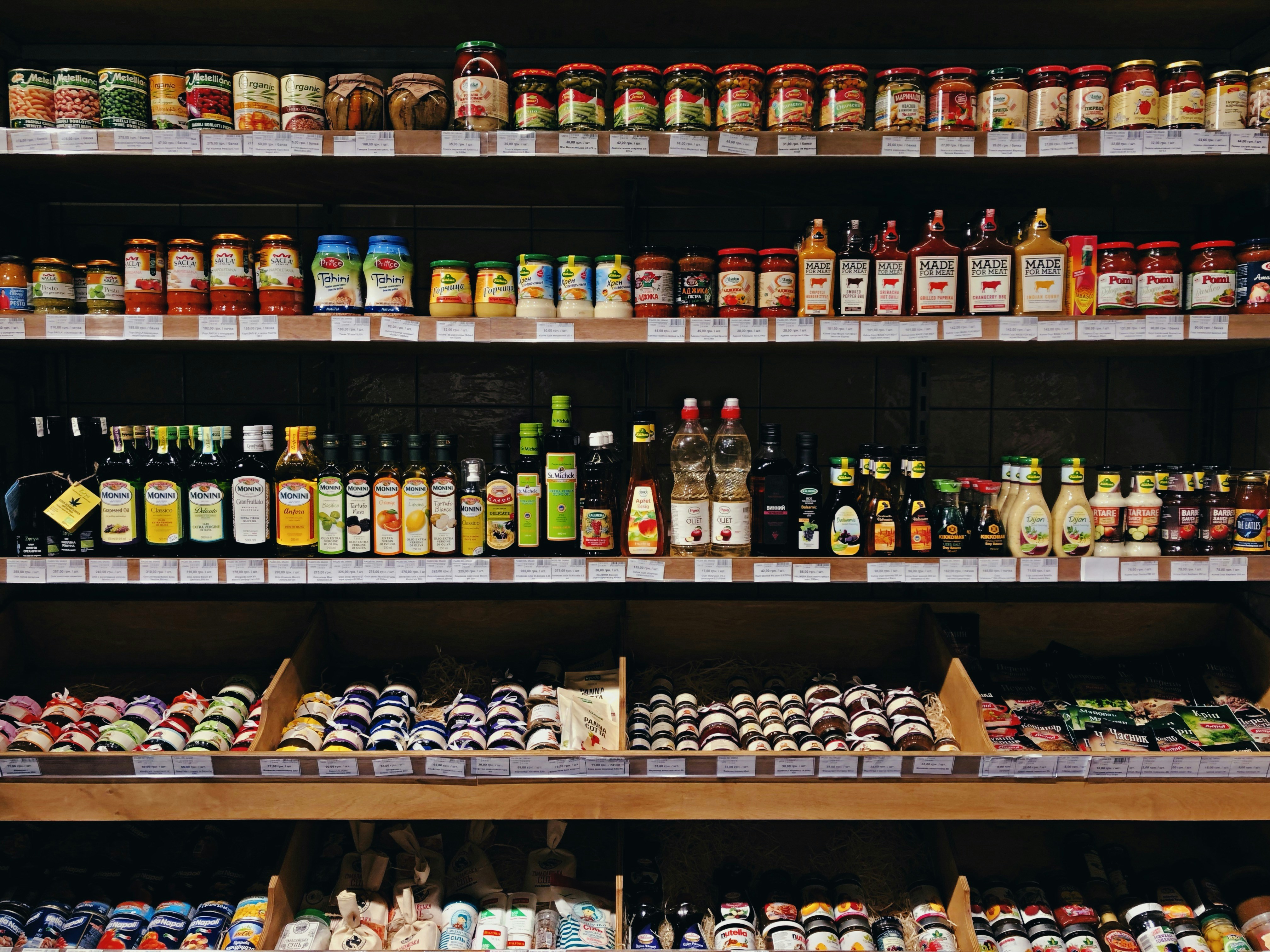

This piece pairs with today's Dispatch on grocery-price concentration — the one about four companies controlling most of the beef, two controlling most of the seed corn, and nobody controlling what "avocado oil" is actually allowed to mean: "Your Grocery Bill Isn't High Because of Inflation". That piece is about the market structure. This one is about the one lever available at home tonight, before any of that structure changes: buy less of what a concentrated industry is selling you, starting with the products where the markup is highest and the DIY version is easiest to make.
The Condiment Aisle Is Mostly Water, Salt, and Branding
A meaningful share of what sits in a shopping cart — mayonnaise, ketchup, mustard, salad dressing, broth — is a handful of shelf-stable ingredients marked up for the packaging, the brand, and the plant that made it, not for anything hard to replicate at home. None of this is an argument for making everything from scratch; buying meat, produce, and staples that are genuinely difficult to DIY is still sensible. It's specifically about the branded, packaged products where a jar of technique and twenty minutes get you most of the way to the same result for less.
The savings are real, if not enormous, on any single jar. Independent cost comparisons put homemade mayonnaise at roughly 19% to 37% cheaper than store-bought, with the bigger end of that range showing up against premium or "clean label" brands specifically, which matters, because those are exactly the products carrying the biggest markup for a purity promise that, per today's Dispatch, isn't always being kept. (The Dispatch's avocado-oil section is the sharper version of this: a July 2026 UC Davis study found that the large majority of avocado-oil-labeled chips, mayonnaise, and salad dressings tested were actually cut with cheaper soybean, canola, or safflower oil. A homemade jar made with an oil you chose yourself doesn't have that problem.)
Spice blends are the most extreme version of this markup, and the numbers are concrete rather than a range. A packet of taco seasoning runs roughly $1.29 to $1.53 at the grocery store; the same seasoning made from spices most kitchens already have on hand — chili powder, cumin, garlic powder, paprika, salt — costs somewhere around $0.13 to $0.20 per equivalent batch. That's five to ten times the price for a mix of pantry spices already sitting in the cabinet. Ranch, chili, and Italian seasoning blends follow the same pattern, and none of them requires a recipe more complicated than measuring spoonfuls into a jar.
A few places to actually start, all free and recipe-based rather than trying to sell you anything:
- The Kitchn's "Make or Buy" series (thekitchn.com) runs actual side-by-side cost and quality comparisons before telling you whether something's worth making; their ketchup piece is a good entry point.
- Attainable Sustainable (attainable-sustainable.net) — a large, well-organized library of pantry staples to make at home, mayonnaise and mustard included, built specifically around reducing reliance on packaged goods.
- Serious Eats — rigorously tested, ingredient-science-based recipes for mayonnaise, ketchup, mustard, and most other condiments, useful if you want to understand why a homemade version works, not just the steps.
- Budget Bytes (budgetbytes.com) — cost-per-recipe breakdowns built into every post, useful for confirming a given condiment is actually worth your time before you buy the ingredients, and the source for the taco seasoning breakdown above.
Start here, if picking just one thing: spice blends. No refrigeration, no food-safety clock to watch, and the widest markup of anything in this piece — a jar made once lasts as long as any other dry good in the pantry. Condiments that need refrigeration are worth doing next, once that habit is in place.
One Practical Catch: Shelf Life
Store-bought mayonnaise lasts roughly two months in the fridge once opened, because it's formulated with preservatives to do exactly that. Homemade mayo isn't, and the safety math is different: made with pasteurized eggs, USDA guidance puts it at about 4 days refrigerated, with other food-safety sources giving a slightly wider 3- to 5-day window. That's not a reason to skip it — it's a reason to treat it as a make-what-you 'll-use-this-week item rather than a batch-and-forget one. Ketchup is more forgiving: homemade versions typically hold one to two months refrigerated in a clean, sterilized container, closer to (if still short of) the store-bought timeline. The practical rule of thumb: batch the shelf-stable stuff — spice blends, mustard, vinegar-based dressings — in bulk, and make egg-based condiments like mayo in smaller amounts, more often.
Bread Deserves Its Own Mention
Bread was on the Dispatch's list of packaged staples worth reconsidering, and it's arguably the one with the biggest gap between "sounds intimidating" and "actually is." The recipe below is the no-knead method — flour, water, salt, and yeast, an overnight rise, and a hot Dutch oven doing the actual work.
No-Knead Artisan Bread (adapted from Bob's Red Mill; makes one loaf, about 16 servings)
Ingredients: 3 cups bread flour, 1½ cups warm water, 2 teaspoons salt, ½ teaspoon active dry or instant yeast.
Method: Stir the flour, salt, and yeast together in a large bowl, add the water, and mix just until a shaggy, sticky dough comes together — no kneading. Cover and let it sit at room temperature for 10 hours (overnight is the easy way to hit this). The next day, heat the oven to 450°F with an empty 4-quart Dutch oven inside for 30 minutes. While it heats, turn the dough out onto a floured surface, shape it into a rough ball, and let it rest under a loose plastic wrap for 30 minutes. Drop the dough into the hot Dutch oven, cover, and bake 30 minutes; uncover and bake 12 minutes more. Let it cool completely before slicing — cutting it hot ruins the crumb.
This is a genuinely different tradeoff than the bread machine below: no kneading and no special equipment beyond a Dutch oven, but it needs a 10-hour unattended rise and a hot oven at bake time, versus a machine that handles the whole process — mixing, kneading, rising, and baking — on its own timer. Worth trying the no-knead version first since it costs nothing to attempt; the machine is the move once bread's a regular enough habit that the hands-off convenience is worth the counter space.
My wife is the bread maker in the house, and she goes back and forth between the two depending on how the week's going. On busier stretches when nobody has time to babysit a Dutch oven, the bread machine wins by default. But when there's time for it, this is the recipe she reaches for — she makes it often, and it's genuinely one of our favorites, machine or not.
The real barrier to making bread at home isn't the recipe, it's the time and the kneading. A bread machine removes the need to add flour, water, yeast, and salt, set it, and walk away — the machine mixes, kneads, rises, and bakes on its own. That also puts control over what's actually going into the loaf back in your hands — organic flour, no dough conditioners, no preservatives, no added sugar beyond what the recipe calls for — which store-bought bread doesn't offer at any price point without paying a premium for it. For a busy family, that's the whole case: it's not about saving time over a store-bought loaf, it's about getting a better loaf for less effort than baking one by hand.
We've used a Panasonic SD-YD250 with a built-in yeast dispenser since January 2016, and it's still running. That exact model isn't sold anymore, but Panasonic's current version is the direct successor: Panasonic Automatic Bread Maker. (Affiliate link.)
Beans and Rice: The Cheapest Real Food There Is
Canned beans aren't a bad choice — canned is opening a can. But the price gap is real, and over the course of the week, it adds up. Canned pinto beans run about $0.25 per half-cup serving versus roughly $0.08 per half-cup dried; canned black beans work out to about $0.42 per half-cup serving versus about $0.20 per half-cup dried. Averaged across varieties, cooking from dry is about 40% cheaper than the canned equivalent, and a family eating beans once a week can save close to $80 a year from that swap alone. The trade-off is time, not skill: soak dried beans overnight, then let a slow cooker finish them while you're at work. No standing over a pot, no extra step beyond the soak.
Rice doesn't need a dedicated rice cooker any more than beans need a can. A basic pot with a lid does the same job as a $40-$100 single-purpose rice cooker; the appliance buys a timer and a keep-warm setting, not a better result.
The Right Tools (You Probably Don't Need Many)
Most specialized single-purpose pots and pans — the rice cooker, the egg cooker, the sandwich press — solve problems a basic kitchen already covers. A quality stainless steel pot and pan set handles the vast majority of home cooking and doesn't need replacing often: we've used a similar Farberware set for 33 years, since it was a wedding gift — this is the current equivalent: Farberware Stainless Steel Pot and Pan Set. (Affiliate link.) A well-seasoned cast iron pan with a lid is a genuinely good addition — good for sautéing, frying, searing, or going straight into the oven for a pie or casserole — but it's a nice-to-have, not a requirement: Cast Iron Pan with Lid. (Affiliate link.)
The one category actually worth owning is a slow cooker or a pressure cooker, because both do something a stovetop can't: cook unattended while you're at work, which is exactly what makes the dried-beans routine above realistic on a weeknight. We recently picked one up for our daughter: Instant Pot. (Affiliate link.)
Beverages: The Other Big Leak
Coffee and bottled drinks are an easy place to lose $10-$20 a day without noticing, and coffee specifically got more expensive to buy either way in 2026 — BLS data showed coffee CPI up roughly 18.5% year-over-year as of April, with retail ground coffee prices up about 29% over the same stretch, largely tariff-driven. That makes brewing at home worth more than it used to be, not less.
A good drip coffee maker at home beats single-serve pod machines on both fronts that matter: cost and quality. Pod coffee runs $0.50-$1.25 a cup; ground coffee brewed at home runs about $0.20-$0.40 a cup — often less than half the price for the same amount of coffee — and a fresh-brewed pot is hotter than what a pod machine dispenses. (Watch for an upcoming Gear review on a replacement for our old Cuisinart, which struggled to make it past two years. Read that review here, https://v64otd.com/gear/cuisinart-14-cup-review/)
The same math applies harder to iced tea. Bottled iced tea costs $1 or more per 12 ounces, and even a gallon jug at the store costs $3-$6. A gallon made at home costs a fraction of that — tea bags, a pan of boiling water, and a pitcher is the entire method. Luzianne is the brand I use: Luzianne Tea. (Affiliate link.)
The Bigger Gap Is Fast Food
The same logic applies with greater force to fast food, because the price gap is larger there than at the grocery store. A home-cooked meal averages roughly $4 to $5 per serving; the same meal from a fast-food counter runs $12 to $16 once it's a full combo, and one fast-food dinner a week works out to something like $160 to $240 a month that a home-cooked version wouldn't cost. That gap isn't new, but 2026 menu-price increases have widened it — a family of four ordering two 10-piece nugget meals and two combo meals at a single chain can clear $40 after tax for one dinner.
None of this requires becoming a cook overnight. Batch-prepping a few staples on one day — rice, beans, roasted vegetables, a protein — so weeknight dinner is assembly rather than cooking from zero, closes most of the actual convenience gap that sends people through a drive-through in the first place. Convenience, not flavor, is usually the real thing being purchased, and it's replicable at home with fifteen minutes of prep on a day you already have time.
If the appeal is specifically the food itself — the exact sandwich, the exact sauce — there's a whole recipe category built around that:
- CopyKat Recipes (copykat.com) — one of the longest-running copycat-recipe sites online, organized by chain, with homemade versions of the specific sandwiches, sauces, and sides people actually crave.
- Taste of Home's Fast Food Copycat Recipes collection — the same idea from an established, mainstream food publication, useful if you want recipes with a longer editorial track record behind them.
- Budget Bytes (again) — less about copying a specific chain, more about the batch-cooking and freezer-meal habits that make "something's ready in ten minutes" true at home too, which is the actual convenience fast food is selling.
Why This Is Worth Doing Beyond the Grocery Bill
Every settlement named in today's Dispatch happened because somebody with leverage — a state attorney general, the DOJ, the FTC, a food-manufacturer plaintiff — made staying the same more expensive for a company than changing. An individual household doesn't have that kind of leverage over a national chain's pricing. What it does have is the same leverage every customer always has: what to buy, and how often. It won't move a chain's pricing on its own. It's also the one lever available tonight, before the next merger, before the next benchmark case, before the next study on what's actually in the bottle.
Sources
Pro Family Chef and Food & Wine — cost comparisons of homemade versus store-bought mayonnaise (roughly 19-37% cheaper homemade, depending on the store brand used as the comparison point).
As You Are Nutrition and Wealthvieu — cost-per-serving comparisons of home-cooked meals versus fast food and eating out ($4-5 per home-cooked serving versus $12-16 for a fast-food combo meal; $160-240/month in added cost from one fast-food dinner per week), and coverage of 2026 fast-food menu price increases.
V64OTD Dispatch, August 11, 2026 — companion piece on food-industry consolidation, including the UC Davis avocado oil adulteration findings referenced above.
The Kitchn, Attainable Sustainable, Serious Eats, Budget Bytes, CopyKat Recipes, and Taste of Home — included as reader resources based on their established reputation and recipe quality, not as sources for any factual claim in this piece.
Budget Bytes and Budget101 — cost breakdowns for homemade versus store-bought taco seasoning (roughly $1.29-$1.53 per store packet versus $0.13-$0.20 per equivalent homemade batch).
USDA food-safety guidance, Tasting Table, and The Cooking Facts — shelf-life figures for homemade mayonnaise made with pasteurized eggs (approximately four days per USDA, three to five days per other food-safety sources) versus roughly two months for opened store-bought mayonnaise.
Homestead and Chill and Fridge.com — shelf-life figures for homemade ketchup stored refrigerated in a sterilized container (roughly one to two months).
Bob's Red Mill — No-Knead Artisan Bread recipe (bobsredmill.com/recipes/how-to-make/no-knead-artisan-bread), adapted for this piece; the method is itself adapted by Bob's Red Mill from Jim Lahey's 2006 no-knead bread technique, originally published in the New York Times.
Panasonic SD-YD250 Automatic Bread Maker with Yeast Dispenser — DeWayne's own appliance, in use since January 2016; the linked current model is Panasonic's direct successor product, included as a personal gear recommendation rather than a third-party review.
Chowhound, the Vegetarian Resource Group, and Don't Waste the Crumbs — cost-per-serving comparisons of dried versus canned beans (roughly 40% cheaper cooked from dry, with specific pinto and black bean pricing examples), and the ~$80/year household savings estimate for a weekly bean habit.
Farberware stainless steel cookware set and Instant Pot pressure cooker — DeWayne's own kitchen equipment (Farberware set in use 33 years; Instant Pot a recent purchase for his daughter), included as personal gear recommendations rather than third-party reviews.
Bureau of Labor Statistics coffee CPI data (via TheStreet, WCPO, and Econlife coverage) — coffee CPI up roughly 18.5% year-over-year as of April 2026, retail ground coffee prices up roughly 29% over the same period, largely attributed to tariff policy on coffee-exporting countries.
Reviewed, The Manual, and Oreate AI — per-cup cost comparisons of K-Cup/pod coffee (roughly $0.50-$1.25/cup) versus home-brewed ground coffee (roughly $0.20-$0.40/cup).
Firebelly Tea and Southern Breeze Sweet Tea — pricing comparisons of bottled and store-bought gallon iced tea versus homemade.
Note on the cost figures above: these are consumer-finance and lifestyle-site estimates, not government data, and are presented as ranges rather than precise figures for that reason. Actual savings will vary by what brand you're comparing against and local grocery prices. The $12-16 fast-food figure is intentionally scoped to fast-food-specific pricing; broader "eating out" figures that include full-service restaurants run higher in some of the same source material (one figure as high as $20.37/serving), which would make the home-cooking savings case even stronger, not weaker, if that comparison were used instead.