
Diabetes, autoimmune disease, and EoE are all climbing — and for some of what's in the food supply, the FDA had the evidence and sat on it for decades.
Originally published on my Substack. Imported to My Ledger as part of the adrenal journey series.
Six in ten American adults now live with at least one major chronic condition: heart disease, diabetes, obesity, or cancer. Four in ten have two or more. Diabetes prevalence among midlife adults climbed from 10.9% to 12.5% between 2013 and 2023 alone. Autoimmune disease is rising even faster, and not just in the US: worldwide incidence is increasing by an estimated 19% a year. One of the more striking single data points comes from a long-running federal health survey, NHANES, which found that a marker of developing autoimmunity nearly tripled among American adolescents ages 12 to 19 across the study's three time periods.
This isn't a story that fits on a bumper sticker, and it resists a single villain. But it's worth taking seriously and being honest about which explanations the evidence actually supports and which are mostly vibes.
The US Is a Genuine Outlier — But Not Alone
The clearest gap between the US and the rest of the developed world is obesity. 42% of US adults are classified as obese, against an average of 17.8% across comparable wealthy countries. That gap translates directly into a reduction in life expectancy: the reduction in life expectancy at age 50 attributable to obesity is larger in the US than in any other measured country.
But "just blame America" doesn't hold up as a complete explanation, because the UK doesn't fit the pattern of a healthier Europe. The UK's diet looks a lot more like America's than like the rest of Europe's, and so does its disease trend: UK type 2 diabetes prevalence has seen some of the steepest increases anywhere in the EU/UK bloc since 1990, even as most of continental Europe saw smaller increases from a lower base.
The Strongest Single Correlate: Ultra-Processed Food
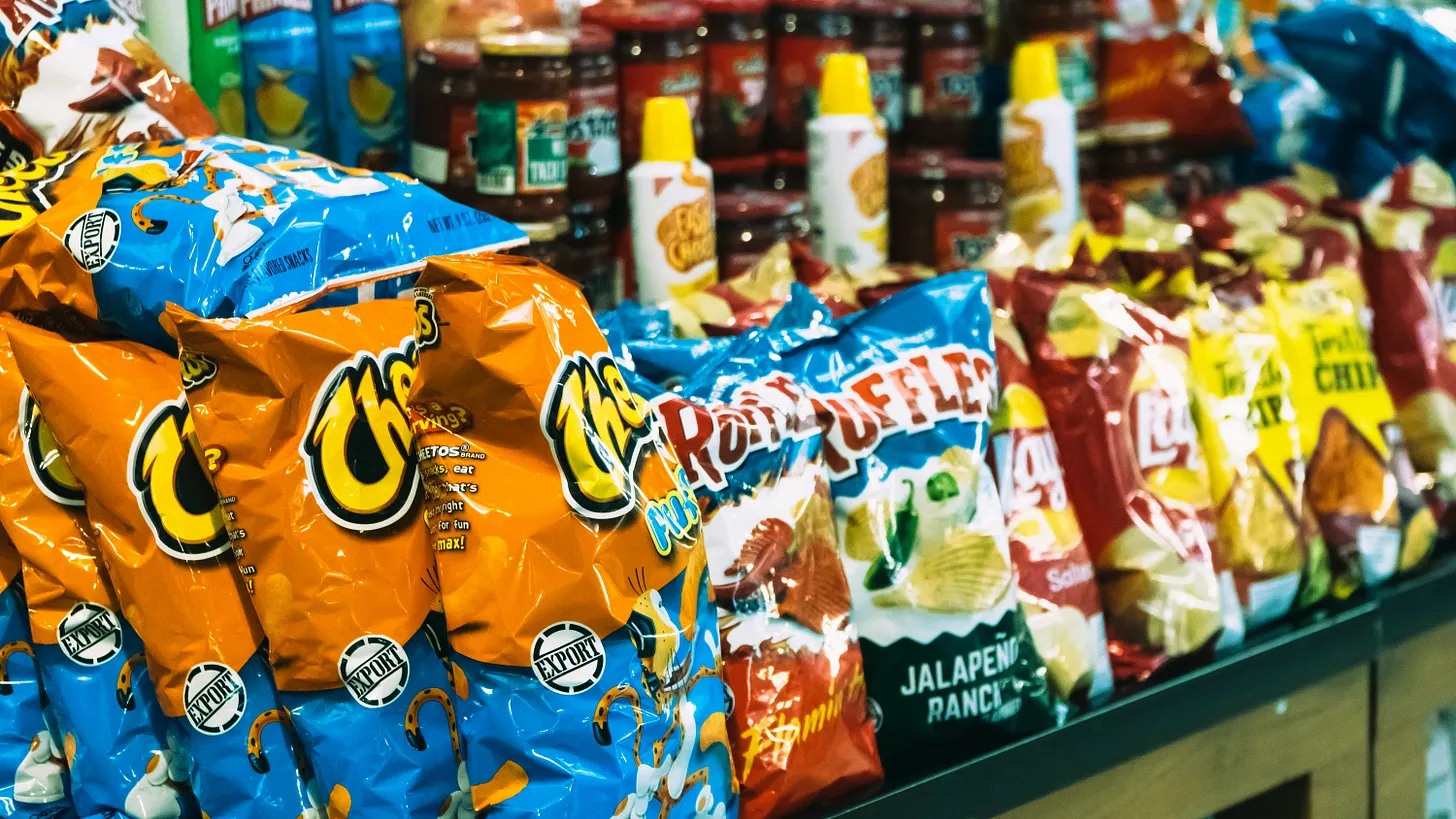
That US-UK similarity points to the most consistent factor in the current research: ultra-processed food. Roughly 58–60% of daily calories in the average US diet come from ultra-processed food. The UK sits nearly as high, at 57%. Elsewhere in Europe, the range runs much lower — as little as 14–15% of caloric intake in Romania. Countries with the highest ultra-processed food consumption also tend to show the steepest increases in obesity, type 2 diabetes, cardiovascular disease, and several other chronic conditions in the research literature. This pattern aligns with the UK and US, both near the top of the UPF-consumption and chronic-disease-trend lists, while lower-UPF countries remain lower on both.
Where the Chemical-Exposure Story Holds Up — And Where the Government Has Simply Failed to Act
Exposure to environmental and endocrine-disrupting chemicals is a real, mainstream concern. It is not a fringe theory position. PFAS ("forever chemicals") are established endocrine disruptors, with documented effects on thyroid hormone regulation and adrenal hormone function; this is the position of the Endocrine Society, a mainstream medical professional body, not just advocacy groups. Evidence links PFAS and related endocrine disruptors to elevated risk of diabetes, reproductive disorders, and immune dysfunction as well.
But the more damning story isn't chemical exposure in the abstract. It's how long the US government has sat on evidence it already had. Lay the actual timelines side by side, and "regulatory gap" undersells it. This is a record of known risk followed by decades of nothing:
FD&C Red No. 3 — Rat studies found the dye caused thyroid tumors in the 1980s. The FDA found sufficient evidence to ban the dye from cosmetics in 1990, explicitly invoking the Delaney Clause. This federal law prohibits any additive shown to cause cancer in humans or animals. It left the same dye legal in food for an additional 35 years. The food ban didn't take effect until January 15, 2025. Manufacturers were given until January 15, 2027, to stop using it — meaning it's still legally in the food supply as of this writing. The FDA's own 1990 cosmetics ban is the government admitting, on the record, that it knew.
Potassium bromate — A bread dough conditioner, classified as a possible human carcinogen based on animal studies. The FDA announced its own plan to review the chemical's safety in 1973. More than fifty years later, there's no public record that the review was ever finished, and the FDA hasn't reassessed the chemical since. It remains on the FDA's "Generally Recognized as Safe" list today and is legal in US bread at up to 75 parts per million. More than two dozen countries have banned it outright, including every EU member state, Canada, China, and Brazil. The only US action has come from states, not the federal government: California's ban doesn't take effect until January 1, 2027, and New York's bill was still pending as of this year.
Titanium dioxide (E171) — Used to whiten thousands of processed foods. The EU's own food safety authority concluded in May 2021 that a concern for genotoxicity — DNA damage — "could not be ruled out," and the EU banned it outright starting February 2022. In the US, there is no federal ban of any kind, more than four years after Europe acted on the same safety review. The only movement is a state-level proposal in New York that hasn't become law.
Azodicarbonamide — A dough conditioner already restricted or banned in the EU. No federal ban exists in the US as of this writing.
Brominated vegetable oil — The one case where the system arguably worked, eventually: after roughly a century of use in US soft drinks, the FDA proposed a ban in November 2023, and it took effect August 2, 2024, with full compliance required by August 2, 2025. A century of use before the government acted is not a fast system, but at least it's a finished one.
The remaining synthetic dyes — Red 40, Yellow 5, Yellow 6, Blue 1, Blue 2, Green 3, Orange B, and Citrus Red No. 2 are all still legal today. In April 2025, HHS and the FDA announced a plan to phase them out. To be precise about what that announcement actually is: a voluntary request to the industry, targeting the end of 2026. It is not a legal mandate. The government's current flagship response to "growing concerns of doctors and parents," in the FDA commissioner's own words, is a request companies can choose to ignore.
The mechanism behind all of it: companies get to grade their own homework. Under the FDA's "Generally Recognized as Safe" (GRAS) framework, a company can convene its own hired panel of experts, have that panel conclude the ingredient is safe, and put it on the market. There is zero requirement to notify the FDA, no public registry of what's been added this way, and no independent government test at any point in the process. In practice, it's food and flavor companies deciding whether their own chemicals are safe, not the FDA. Since 2000, roughly 99% of new food chemicals have been cleared through GRAS self-affirmation or the FDA's voluntary submission process rather than mandatory premarket approval. A proposed rule floated in August 2026 would require companies to notify the FDA. As of this writing, it remains a proposal, not a rule.
That same "ask, don't require" pattern reappears in the government's response once a risk is finally acknowledged. Compare that to the EU's posture on titanium dioxide: one safety review found that a risk "could not be ruled out," and the additive was removed from the food supply within about 9 months. The American system's default, at nearly every stage — approval, review, and even removal — is to ask companies for cooperation rather than require it.
Add it up, and the pattern isn't a gray area needing more study. It's a government that has, in multiple documented cases, known about a specific risk for decades, sometimes acknowledged the risk in its own official actions, yet left the substance on grocery shelves anyway. At the same time, other countries acted years or decades sooner on the same evidence.
Where the Popular Story Gets Ahead of the Evidence
Two of the most commonly blamed culprits hold up worse than their popularity online would suggest.
GMOs: the mainstream scientific position from the World Health Organization and the National Academies of Sciences is that there's no evidence that genetically modified foods are less safe than conventionally bred crops. There is a smaller, vocal group of scientists who dispute that this represents a genuine consensus, but characterizing the field as evenly split misrepresents where most of the evidence and most mainstream health bodies actually land.
Seed oils are the more surprising case. A comprehensive 2026 review of the clinical and observational evidence found that health-harm claims about seed oils are "without scientific foundation," and linoleic acid, the fatty acid dominant in seed oils, is actually associated with lower cardiovascular and diabetes risk in the research reviewed. The "seed oil is toxic" narrative has exploded online — from roughly 366,000 mentions in 2019 to 9.7 million in 2024. But that surge in attention has outpaced the actual science. The more defensible read is that seed oils are a marker for ultra-processed food, since they're a near-universal ingredient in it, rather than a harmful ingredient in their own right.
EoE: A Smaller, More Specific Piece of the Same Puzzle
Eosinophilic esophagitis deserves its own mention, as it has risen sharply, particularly among children in Western countries. Current research points to multifactorial causes rather than a single exposure: food and airborne allergens; a Westernized diet; disruption of infant gut microbiome development from maternal antibiotic use during pregnancy and acid-suppressing medication in infancy; and environmental factors, including water quality and particulate air pollution, layered atop genetic susceptibility. It's a smaller-scale version of the same story playing out with chronic disease broadly: several converging factors, not one clean cause.
What This Actually Adds Up To
Ranked by how well the evidence actually supports each one: ultra-processed food dominance is the best-supported single driver, and the US-UK-Europe comparison is the clearest evidence for it. Endocrine-disrupting chemical exposure, PFAS in particular, is a real and mechanistically well-supported second factor. GMOs, specifically, are not well supported as a driver by mainstream evidence. Seed oils are probably the weakest link in the popular version of this story, despite being the most talked-about.
But the additive timeline isn't a matter of scientific uncertainty, the way the disease-causation question is. Those are just dates, and they're not in dispute: 1990 to 2025 on Red No. 3. 1973 to still-nothing on potassium bromate. 2022 to still nothing on titanium dioxide. The government had the evidence. It sat on it. When it finally moved on Red No. 3 and the remaining synthetic dyes, it took a change in HHS leadership and explicit public pressure to do it, not new science — the underlying data had been sitting there the whole time.
The disease-causation question is genuinely unsettled and won't be resolved by a single article. The regulatory timeline question isn't unsettled at all. It's just been ignored.
Sources
Centers for Disease Control and Prevention. Trends in Multiple Chronic Conditions Among US Adults, By Life Stage, Behavioral Risk Factor Surveillance System, 2013–2023.
American Action Forum. Primer: Chronic Disease Among Adults in the United States.
National Institutes of Health. Autoimmunity may be rising in the United States (NHANES data and Dinse et al.'s analysis of antinuclear antibody prevalence trends).
PMC. Perinatal Environmental Risks for Eosinophilic Esophagitis: A Systematic Review and Meta-Analysis.
American Academy of Pediatrics. Etiology of Eosinophilic Esophagitis.
Peterson-KFF Health System Tracker. How has the burden of chronic diseases in the U.S. and peer nations changed over time?
PMC. Trends in type 2 diabetes mellitus disease burden in European Union countries between 1990 and 2019.
medRxiv. Ultra-processed food staples dominate mainstream U.S. supermarkets. Americans more than Europeans forced to choose between health and cost.
Visual Capitalist. Visualizing Ultra-Processed Food Consumption by Country.
PubMed. Concerns about the health effects of industrially produced seed oils are without scientific foundation: a scoping narrative review of the clinical and observational evidence, 2026.
Johns Hopkins Bloomberg School of Public Health. The Evidence Behind Seed Oils' Health Effects.
National Academies of Sciences. Foods Made With GMOs Do Not Pose Special Health Risks.
World Health Organization. Statements on genetically modified food safety.
Oxford Academic / Endocrinology. Effects of Endocrine-Disrupting Chemicals on Adrenal Function.
Endocrine Society. Latest Science Shows Endocrine Disrupting Chemicals in Plastics, Pesticides, and Other Sources Pose Health Threats Globally.
U.S. Food and Drug Administration. FD&C Red No. 3 — ban announcement and compliance timeline.
HHS.gov. HHS Secretary Kennedy Directs FDA to Explore Rulemaking to Eliminate Pathway for Companies to Self-Affirm Food Ingredients Are Safe.