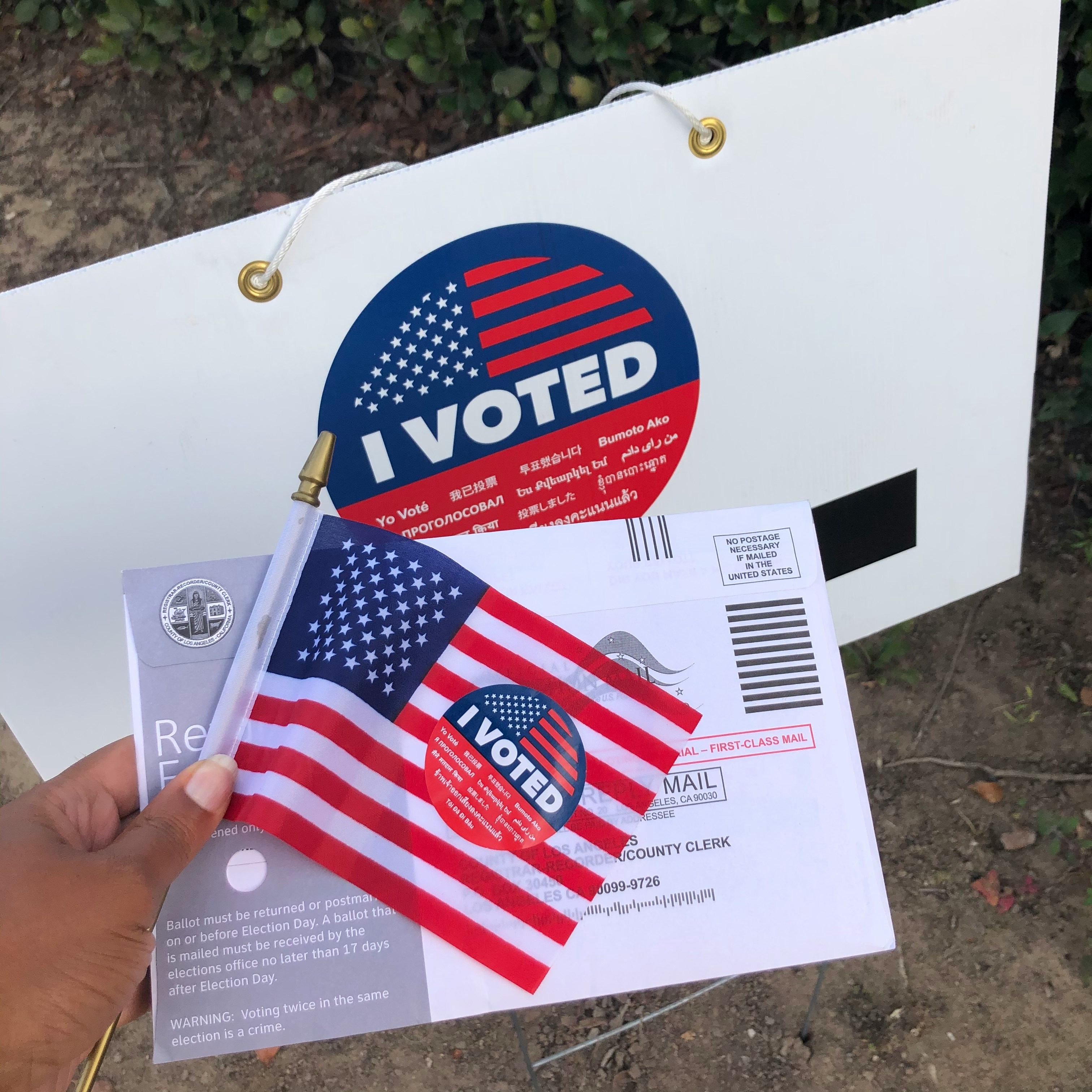

It's Election Day. Before you vote, ask yourself one question: what has either party fixed that lasted longer than the current election?
This is My Ledger, the personal side of v64otd.com. What follows is my opinion, written in the first person, with the facts sourced at the bottom. I'm one guy in Texas with no party paying my bills.
Disclosure: I've endorsed Jenn Mack, an independent write-in candidate, for Texas governor, and I'm voting Libertarian in my other races.
📜 The Faction Files: How Two Parties Took Over America
Part 1: The Parasite and the Host (you are here)
Part 2: The Founders Warned Us About Parties. Then They Built Them.
Part 6: The Lockdown (coming soon)
Part 7: The Megaphone (coming soon)
Part 8: The Promise and the Mirror (coming soon)
Uniparty: A term for the Democratic and Republican parties acting as one system. They fight loudly about everything and cooperate quietly on the one thing that matters to both of them: staying in power.
The Parasite and the Host
I've spent the last month writing about how both parties fail us: the stock-trading ban they both killed, the Social Security cut they both ignore, the health care premiums they both let climb. The more I wrote, the more one picture kept coming to mind.
A parasite and its host.
Except in this case, there are two parasites, and they need each other. Republicans raise money warning you about Democrats. Democrats raise money warning you about Republicans. Each one is the other's best fundraising letter. If either one disappeared tomorrow, the other would lose its reason to exist. And we're the host. We supply the votes, the donations, and the tax dollars, and in exchange they promise to protect us from the other one.
Look at what that relationship actually produces:
• They can't do the basic job. Congress is supposed to pass 12 spending bills by October 1 every year. It has done that on time only four times since 1977, the last in 1997. Instead, we live from one short-term funding bill and shutdown threat to the next.
• They write fixes with expiration dates. The health insurance credits Democrats passed came with an expiration date, and Republicans let them expire. The Social Security cut scheduled for 2032 is current law, and neither party has put a fix up for a vote. An unsolved problem is a campaign issue that never runs out of steam.
• They wrote the rules of the game together. The Commission on Presidential Debates, which decides who gets on the debate stage, was created in 1987 by the chairmen of the Democratic and Republican parties. When it took over, the League of Women Voters walked away, saying the campaigns' demands would "perpetrate a fraud on the American voter." Since 2000, the commission has required 15% in national polls to qualify, a bar almost no one outside the two parties has cleared.
And yet a record 45% of Americans now call themselves independents, and 62% say we need a third major party. We know something's wrong. We keep voting for it anyway, because we've been taught that the other side is worse.
That's not a rivalry. That's a business model.
Are Independents an Illusion?
So what about independents? I'll ask the question plainly: when someone runs as an independent and then caucuses with Democrats or Republicans, are they really independent? Or is "independent" just a costume?
Here's my honest answer: today, mostly yes, it's an illusion. But not always for the reasons you'd think.
• The evidence that it's an illusion. Both independent senators, Bernie Sanders and Angus King, caucus with Democrats. When Kyrsten Sinema left the Democratic Party in 2022 and registered as an independent, she asked Senate Majority Leader Chuck Schumer to let her keep her committee seats, and he agreed. She said, "When I come to work each day, it'll be the same." When an independent votes with one party, sits on that party's committees, and helps that party hold its majority, the label on the ballot doesn't mean much.
• Why it happens. Here's the part most people miss. Committee seats in Congress, where the real work happens, are allocated by the two-party caucuses. An independent who refuses to join one generally gets no committee seats. So an independent who wants to do anything besides give speeches is pushed into one camp. Some of them surely use the label as a brand. Others are just stuck in a system built to absorb them.
• The evidence it doesn't have to be. A few people are finally testing that. California Rep. Kevin Kiley left the Republican Party this year, says he won't caucus with it, and has proposed rules guaranteeing committee seats to members outside both parties. Six independent Senate candidates calling themselves the Fulcrum Caucus want to win enough seats that neither party can run the Senate without them. Former Sen. Joe Manchin launched a group to elect independents who pledge not to caucus with either side.
So my answer is a test, not a label. Before you vote for an independent, ask one question: will you refuse to caucus with either party? If the answer is no, you're voting for a D or an R wearing a different shirt.
The Libertarians: The Most Likable Folks in Politics
I'll say this up front: Libertarians are probably the most likable bunch of people in American politics. Their appeal crosses the left-right divide because they start from one idea: leave people alone as long as they aren't hurting anyone. That's why I'm voting for them in my other races today.
But I don't agree with everything on their platform, and I want to be honest about where I part ways.
Where they lose me: drugs. The Libertarian Party's national platform calls for "the repeal of all laws creating 'crimes' without victims, such as gambling, the use of drugs for medicinal or recreational purposes, and consensual transactions involving sexual services." Legalizing all drugs is a non-starter for me.
Here's what I'd do instead:
• Treat marijuana like alcohol. Make it legal, tax it, and sell it in liquor stores. The system to keep it away from kids is already in place: ID checks, licensed sellers, and stores that lose their licenses if they break the rules. Twenty-four states and Washington, D.C., had already legalized recreational marijuana by early 2024, and more than half of Americans lived in one of them. Texas isn't one of them.
• Let adults grow their own, within limits. Up to five plants for personal use.
• Keep DUI laws. Driving high is driving impaired. That doesn't change.
• Treat addiction as an illness, not a crime. Someone hooked on fentanyl needs treatment more than a cell.
• Keep busting the dealers. Selling controlled substances should stay a crime.
There's evidence for that approach, and evidence for what happens when you get it wrong. In 2001, Portugal made possession of small amounts of drugs for personal use an administrative offense instead of a crime. Users were sent to panels of legal, health and social work professionals instead of court. Drug-related HIV and deaths fell, the share of prisoners held for drug offenses dropped from 44% in 1999 to 21% in 2008, and drug use didn't explode. But when Portugal cut funding for treatment after the 2008 financial crisis, some of that progress reversed. Overdose rates in Lisbon nearly doubled between 2019 and 2023.
Oregon tried a version of it here. Voters decriminalized small amounts of drugs in 2020. By 2024, the legislature reversed course and made possession a misdemeanor again, with the option of treatment instead of prosecution.
The lesson I take from both is that decriminalization without serious treatment fails. Treating addiction as an illness only works if you actually treat it.
Other Libertarian ideas worth considering:
• End qualified immunity. The platform supports ending the legal shield that often protects police and prosecutors from lawsuits for violating someone's rights. Nobody should be above the law, including the people who enforce it.
• Stop prosecutors from bullying people into plea deals. The platform opposes "over-charging," the practice of piling on charges to scare defendants into pleading guilty rather than going to trial. You have a right to a jury. Pressuring people out of it undermines that right.
• Get government out of your work. The platform opposes occupational licensing laws that treat earning a living as "a state-granted privilege." Licenses make sense for doctors and electricians. Plenty of other licensing just protects people already in the business from new competition.
• Peace before intervention. The platform says American foreign policy should emphasize "peace with all nations, entangling alliances with none," which echoes Thomas Jefferson's first inaugural address. Whatever you think of specific conflicts, it's a fair question to ask before we go to war.
• Less secrecy. The platform opposes the government's use of classification to hide information the public should have access to, "especially that which shows that the government has violated the law."
I don't agree with Libertarians on everything. I don't agree with anybody on everything. But I'll take an Independent or a party that wants to leave me alone over two parties that want to rule me.
Faith, Factions and the Ballot
Now let me talk to my fellow Christians, many of whom vote Republican every time.
Religion creates voting blocs. That's not an insult; it's a fact. In 2024, according to Pew Research, Trump won 55% of Catholics, while Harris won 70% of voters with no religion and most Black Protestants. But blocs aren't permanent. Black Protestant support for Trump rose from 9% to 15%, and Catholic support rose 6 points. Muslim voters, whom the Democrats had long counted on, abandoned them. CAIR's exit poll found 53% voted for Jill Stein, 21% for Trump and 20% for Harris. No faith is anybody's property.
The judging starts at home. Before we worry about anyone else's faith shaping our politics, Christians should look at our own pulpits. Too many evangelical preachers claim moral and scriptural superiority over other Christian denominations, and some go as far as calling them cults. In 2011, Robert Jeffress, pastor of First Baptist Dallas, called Mormonism "a cult" while campaigning for Rick Perry against Mitt Romney. He wasn't alone, and he hasn't been the last. When a pulpit spends more time judging other believers than serving its neighbors, it isn't preaching the Gospel. It's building a faction, and factions are exactly what the Founders warned us about.
That should matter to Christians, because the Founders understood something we have forgotten. Any faith, ours included, that gains control of the government will be tempted to use that control against everyone else. In 1802, it was the Baptists of Danbury, Connecticut, a minority who felt squeezed by their state's established church, who wrote to President Jefferson. His reply gave us the phrase "a wall of separation between Church & State." That wall protects the church from the government as much as it protects the government from the church.
One law for everyone. That wall has to work in every direction. Muslim Americans are organizing politically the way every faith and immigrant community before them has. In 2021, Hamtramck, Michigan, elected a Muslim mayor and what is likely the nation's only all-Muslim city council, and Dearborn elected its first Muslim and Arab American mayor. In Minnesota, Rep. Ilhan Omar has represented Minneapolis in Congress since 2019. Winning elections is how democracy works. Nobody gets to cry foul just because a different church, mosque, or synagogue showed up to vote.
But many Americans worry about religious law, specifically Islamic law, or Sharia, competing with American law, and the line has to be drawn clearly. In America, the Constitution and the laws passed by elected legislatures govern. Not the Bible, not the Torah, not Sharia. Religious arbitration exists for Jewish, Christian, and Muslim families alike, but American courts enforce it only when it doesn't violate American law. Texas made that explicit in 2017 with a law requiring family courts to refuse any foreign law or ruling that violates constitutional rights or public policy.
Texas politics shows how quickly this turns into a faction fight. A report by the Middle East Forum, a group that tracks Islamist organizations, found that Texas state agencies have managed about $13 million in grants to 18 Islamic organizations over roughly a decade, about $11 million of it to a single group. Meanwhile, Gov. Greg Abbott declared the Council on American-Islamic Relations a terrorist organization in November 2025, a label only the U.S. Secretary of State can legally give, and CAIR sued. He also opened four state investigations into a planned Muslim community near Josephine. The U.S. Justice Department closed its own probe of that project.
Editorial: My line is simple, and it applies to everyone. Tax dollars shouldn't fund any religious group's religious mission, whether that's a mosque, a church, or a synagogue. And no religious law, including the one I live by, gets to override the Constitution. If we hold every faith to that standard, we don't need to single any of them out.
Lobbying: Religion, Nations, and Your Representative
Faith-based and nation-based lobbying is where the Uniparty's appetite for money gets especially hard to see, and it deserves more scrutiny than either party gives it.
• Advocacy for foreign countries is big money. In 2024, AIPAC's super PAC, the United Democracy Project, spent $23.2 million to defeat two House Democrats, Jamaal Bowman and Cori Bush. Those were two of the most expensive House primaries in American history. Pro-Israel advocacy isn't driven only by Jewish Americans, either; some of its biggest supporters are evangelical Christians.
• It's not just one country. According to an analysis of federal foreign-agent filings, Saudi Arabia, Japan, China and South Korea all outspent Israel and Qatar on registered lobbying in Washington in 2024.
• Both parties take it. Foreign governments and faith-based groups lobby Republicans and Democrats alike, because both parties sell access.
Editorial: I don't care which faith or flag is behind it. When a lobby can spend tens of millions of dollars to pick a congressman, or a foreign government can pay to shape American policy, voters get crowded out. We need full, fast disclosure of every dollar spent on behalf of a foreign country or a religious lobby, a long cooling-off period before former members of Congress can lobby, and real enforcement of foreign-agent laws. Your representative should answer to you, not to any lobby.
Here's what I wish more of my fellow believers would admit: people will always worship differently, have a drink, smoke a joint, or have sex and seek an abortion, no matter what the law says. Laws can shape behavior. They can't erase it. Prohibition proved that.
Abortion: A Question for My Fellow Pro-Lifers
Abortion is the hottest issue in this whole discussion, so I'll be direct.
Christians are not bad people, and I'm not writing this to paint them that way. But I think many of us talk about abortion as if it only happens to other people. It doesn't. In 2014, according to the Guttmacher Institute, 24% of abortion patients were Catholic, 17% were mainline Protestant, and 13% were evangelical Protestant. It happens in our churches, in our families, and sometimes to the teenage daughter nobody talks about, or to the couple who just learned their baby has a severe genetic condition. Those decisions get made quietly, and we rarely hear about them.
So here's my question for everyone who opposes abortion, and I count myself among those who think it's tragic: if we want fewer abortions, how many of us are willing to adopt or foster the children who need a home?
The need is real. At the end of September 2024, there were about 329,000 children in foster care. Over 70,000 were waiting to be adopted, and nearly 50,000 were legally free, meaning their parents' rights had already been ended. That same year, more than 15,000 young people aged out of foster care without a permanent family.
To be fair, many Christians already answer that call. A 2013 Barna study found that practicing Christians were more than twice as likely to have adopted as the general public, 5% compared with 2%. That's to their credit. But 5% isn't enough to match the volume of the "pro-life" talk.
Where's the legislation? Here's the hard part. A private domestic infant adoption through an agency typically costs $20,000 to $45,000. That puts it out of reach for most working families. To be fair to the right, Republicans did act last year: the 2025 tax law made up to $5,000 of the adoption tax credit refundable, so families who owe little in taxes can actually get it. The maximum credit for 2026 is $17,280. That's real progress, and it deserves credit.
But here's what I'd add:
• Let adoptive parents cover the birth mother. Where state law allows, adoptive families can often help pay a birth mother's pregnancy-related medical bills, but they can't add her to their own health insurance. A law letting adoptive parents add the birth mother to their plan for maternity care would make choosing adoption safer and cheaper for everyone involved.
• Make adoption from foster care easier, faster, and well supported. The kids are there now. Clear the paperwork, the delays, and the lack of post-placement help.
• Put our money where our mouths are. If we want women to choose life, we have to make life after birth possible, for the mother and the child.
And a question for the Catholic Church. Let me be fair here too. Some Catholic Charities programs already scale their fees to income. Catholic Charities of the Diocese of Arlington, Virginia, for example, charges $15,000 to $24,000 for a newborn adoption depending on household income, and much less to adopt from foster care. That's better than many private agencies. But $15,000 is still a lot of money for a family earning $45,000 a year. If the Church is the strongest pro-life voice in America, and it is, then I'd ask: why not make adoption through the Church affordable for every faithful family that wants to give a child a home?
Being pro-life can't end at birth. If it does, it's just another campaign slogan, and the Uniparty already has plenty of those.
So What Do We Do Today?
The parasites need one thing to survive: a host that keeps feeding them. That's us.
The Founders warned us. John Adams wrote in 1780 that he dreaded "a division of the republic into two great parties" more than anything, and called it "the greatest political evil under our Constitution." George Washington warned that parties could become "potent engines" for "cunning, ambitious, and unprincipled men" to "subvert the power of the people."
We built it anyway. We can stop feeding it.
1. Look at every name on your ballot today. Not just the R and the D. Find your polling place at vote411.org if you need it.
2. Ask independents the one question that matters: Will you refuse to caucus with either party?
3. Vote for what you believe, not against what you fear. A vote for a third party or a true independent isn't wasted. It's a signal both parties notice.
4. If you're pro-life, do something beyond voting. Look into fostering or adopting, support a family who has, or push your state lawmakers to make adoption cheaper and easier.
5. Tomorrow, keep watching. The parasites count on us forgetting between elections.
📜 The Faction Files: How Two Parties Took Over America
Part 1: The Parasite and the Host (you are here)
Part 2: The Founders Warned Us About Parties. Then They Built Them.
Part 6: The Lockdown (coming soon)
Part 7: The Megaphone (coming soon)
Part 8: The Promise and the Mirror (coming soon)
Sources
1. Pew Research Center, "Congress has long struggled to pass spending bills on time," Oct. 1, 2025: https://www.pewresearch.org/short-reads/2025/10/01/congress-has-long-struggled-to-pass-spending-bills-on-time/
2. Wikipedia, "Commission on Presidential Debates": https://en.wikipedia.org/wiki/Commission_on_Presidential_Debates
3. Gallup, "New High of 45% in U.S. Identify as Political Independents," Jan. 12, 2026: https://news.gallup.com/poll/700499/new-high-identify-political-independents.aspx
4. Gallup, "Americans See Need for Third Party, but Offer Soft Support," Oct. 20, 2025: https://news.gallup.com/poll/696521/americans-need-third-party-offer-soft-support.aspx
5. NTD, "Schumer to Keep Sinema's Committee Assignments After She Leaves Democratic Party," Dec. 9, 2022: https://www.ntd.com/schumer-reveals-what-will-happen-after-sinema-leaves-democratic-party_887447.html
6. IVN, "Kevin Kiley Says He's Done Caucusing with Republicans. Senate Independents Want to Break the Caucus System Entirely," Sept. 24, 2026: https://ivn.us/kevin-kiley-says-hes-done-caucusing-with-republicans-senate-independents-want-to-break-the-caucus-system-entirely/
7. NPR, "Inside Joe Manchin's new quest to elect more Independents to Congress," July 27, 2026: https://www.npr.org/2026/07/27/nx-s1-5906367/joe-manchin-independent-candidates-congress
8. Libertarian Party, National Platform: https://lp.org/platform/
9. Pew Research Center, "Most Americans now live in a legal marijuana state," Feb. 29, 2024: https://www.pewresearch.org/short-reads/2024/02/29/most-americans-now-live-in-a-legal-marijuana-state-and-most-have-at-least-one-dispensary-in-their-county/
10. UNSW Drug Policy Modelling Program, "Was decriminalisation effective in Portugal?," Nov. 2024: https://unsw.edu.au/content/dam/pdfs/ada/sprc/research-reports/dpmp-drug-summit-2024-explainers/2024-11-was-decriminalisation-effective-in-portugal-v3.pdf
11. Axios Portland, "Oregon Legislature reverses drug decriminalization," March 2, 2024: https://www.axios.com/local/portland/2024/03/02/oregon-drugs-reverse-decriminalization-legalize-law-bill
12. Religion News Service, "Pew study finds Trump gained with Catholics, nonwhite Protestants in 2024," June 26, 2025: https://religionnews.com/2025/06/26/pew-study-finds-trump-gained-with-catholics-nonwhite-protestants-in-2024/
13. CAIR, "CAIR Exit Poll of Muslim Voters Reveals Surge in Support for Jill Stein and Donald Trump, Steep Decline for Harris," Nov. 2024: https://www.cair.com/press_releases/cair-exit-poll-of-muslim-voters-reveals-surge-in-support-for-jill-stein-and-donald-trump-steep-decline-for-harris/
14. Thomas Jefferson to the Danbury Baptist Association, Jan. 1, 1802 (Library of Congress): https://www.loc.gov/loc/lcib/9806/danpre.html
15. Guttmacher Institute, "People of All Religions Use Birth Control and Have Abortions," Oct. 2020: https://www.guttmacher.org/article/2020/10/people-all-religions-use-birth-control-and-have-abortions
16. Administration for Children and Families, "AFCARS FY 2024 Dashboard" (preliminary): https://acf.gov/sites/default/files/documents/cb/2024-afcars-dashboard-printable.pdf
17. Barna Group, "5 Things You Need to Know About Adoption," Nov. 4, 2013: https://www.barna.com/research/5-things-you-need-to-know-about-adoption/
18. Bankrate, "How much does it cost to adopt a baby?": https://www.bankrate.com/personal-finance/smart-money/how-much-does-it-cost-to-adopt-a-baby/
19. Internal Revenue Service, "Notable changes to the Adoption Credit": https://www.irs.gov/node/158386
20. Catholic Charities of the Diocese of Arlington, "Fee Schedule for All Adoption Programs" (rev. June 2018): https://ccda.net/need-help/pregnancy-and-adoption/adopt-a-child/fee-schedule-for-all-adoption-programs.pdf
21. John Adams to Jonathan Jackson, Oct. 2, 1780 (National Archives, Founders Online): https://founders.archives.gov/documents/Adams/06-10-02-0113
22. George Washington, Farewell Address, 1796 (National Archives, Founders Online): https://founders.archives.gov/documents/Washington/05-20-02-0440-0002
23. V64OTD, "Meet the Uniparty," Oct. 6, 2026: https://v64otd.com/dispatch/uniparty-congress-stock-trading-ban-senate-vote/
24. V64OTD, "Neither Party Is Saving Social Security. Both Are Using It to Scare You.," Oct. 27, 2026: https://v64otd.com/dispatch/social-security-uniparty-fear-2032-cut/
25. KSL/AP, "Perry backer: Romney in a 'cult,' not a Christian," Oct. 2011: https://www.ksl.com/article/17572070/perry-backer-romney-in-a-cult-not-a-christian
26. Michigan Advance, "Hamtramck makes history with Muslim mayor and City Council," Nov. 5, 2021: https://michiganadvance.com/2021/11/05/hamtramck-makes-history-with-muslim-mayor-and-city-council/
27. Texas Legislature, HB 45 (2017) bill analysis: https://capitol.texas.gov/tlodocs/85R/analysis/html/HB00045E.htm
28. Middle East Forum, "Texas State Government Gives $13 Million to Islamist Mosques and Community Groups," 2025: https://www.meforum.org/fwi/fwi-research/texas-state-government-gives-13-million-to-islamist-mosques-and-community-groups
29. KUT, "Gov. Abbott declares CAIR, Muslim Brotherhood as terrorist groups," Nov. 18, 2025: https://www.kut.org/politics/2025-11-18/gov-abbott-declares-cair-muslim-brotherhood-as-terrorist-groups
30. ABC News, "Pro-Israel groups spent big to oust Squad members," Sept. 17, 2024: https://www.goodmorningamerica.com/amp/news/story/pro-israel-groups-spent-big-oust-squad-members-113675889
31. Washington Examiner, "Foreigners spend billions to influence US politics. Here's who's cutting the biggest checks," July 28, 2025: https://www.washingtonexaminer.com/?p=3481901