

[DISPATCH_LOG]
The Fed Has a New Boss — And Washington Pulled the Strings
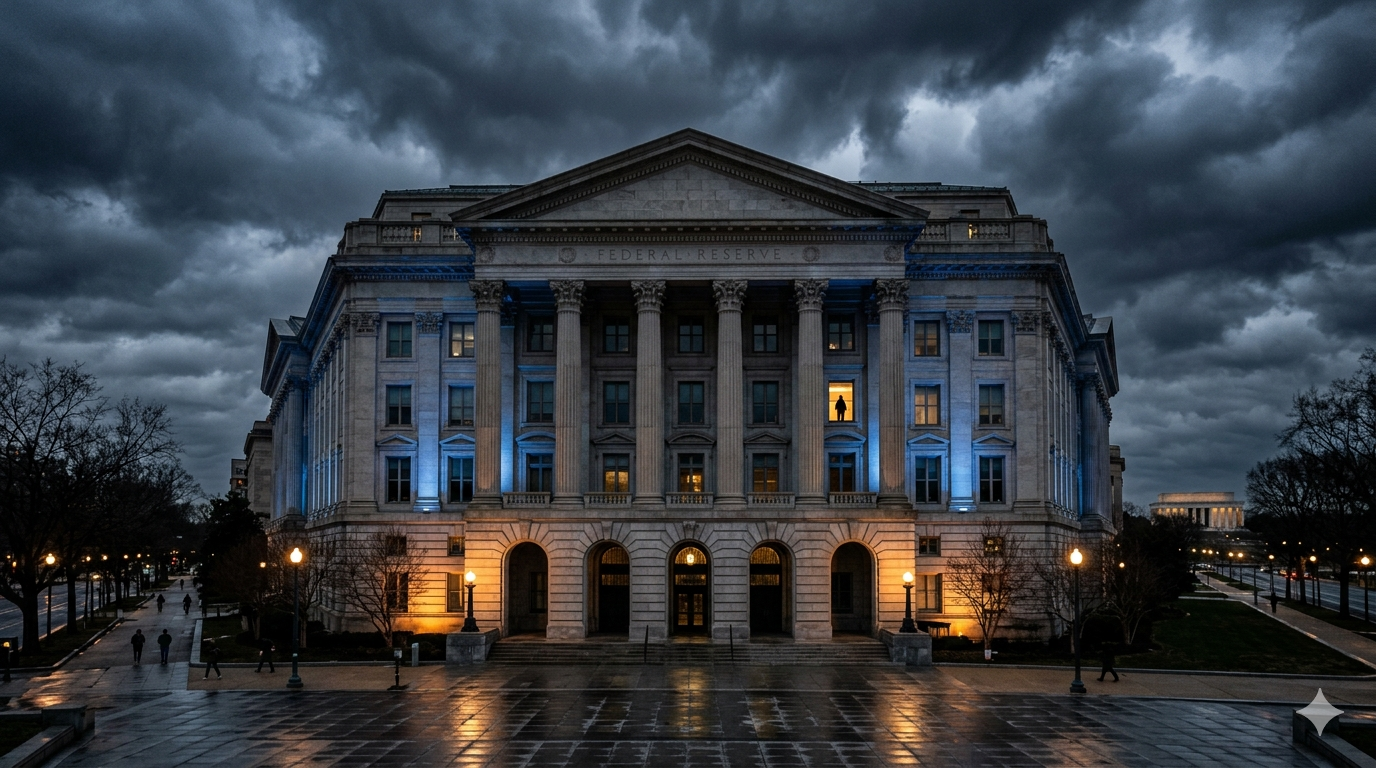
The Federal Reserve has a new chairman, and the way it happened should alarm every American who understands what that institution controls. On May 13, the Senate confirmed Kevin Warsh in a 54-45 vote — the closest, most divisive confirmation of a Fed chair in the modern era. One Democrat crossed the aisle. Every Republican fell in line. The message from Washington was loud and clear: the central bank is no longer operating at arm's length from political power.
The Most Politicized Fed Handoff in Modern History
This handoff did not happen in a vacuum. The Trump administration spent months running a pressure campaign against outgoing Chair Jerome Powell — including a Department of Justice criminal investigation into Powell tied to a building renovation project that a federal judge later ruled was a pretext for forcing Powell to cut rates or resign. When Senator Thom Tillis finally dropped his opposition only after the DOJ agreed to kill that probe, the machinery of the deal was exposed. Warsh's confirmation was horse-traded at the highest levels of government.
Jerome Powell, who spent two terms defending the Fed's institutional independence, will remain on the Board of Governors — an extraordinary move not seen in nearly 80 years — to serve as a check on the new regime. That Powell felt compelled to stay is itself a signal that those inside the building are concerned about what comes next.
The Economic Reality Warsh Inherits
Warsh steps into the chair at the worst possible moment for anyone promising rate cuts. Consumer prices rose 0.6% in April alone, following a 0.9% spike in March. Wholesale prices soared 6% in April. Inflation has now run above the Fed's 2% target for over five consecutive years. Energy prices are surging due to active conflict in the Middle East. Pipeline pressures are at their highest in more than three years.
Trump has made no secret of what he expects: lower interest rates, and fast. He openly joked about suing Warsh if he doesn't deliver cuts. But the FOMC — the 12-member committee that actually votes on rates — is fractured. Four members dissented at the April meeting, the most divided the committee has been since 1992. Market traders now put a 97% probability on rates holding at the June 16-17 meeting. Some are now pricing in a rate hike by year-end.
What Warsh has proposed beyond rates is equally consequential: cutting Fed policy meetings from eight to four per year, slashing press conferences, shrinking the $6.7 trillion balance sheet, and coordinating more closely with the Treasury Department. That last item — closer coordination with Treasury — is where independence ends and political integration begins.
Call to Action: Protect Your Position Before the Pivot
The Fed chair's office just changed hands under political pressure, inflation is accelerating, and the White House wants cheap money it can't have. This is not a passive observation. This is a live economic threat to your purchasing power, your savings, and your financial stability. Act accordingly.
- Audit your dollar exposure: Inflation above 2% for five years running is wealth destruction at scale. Any cash sitting idle in a standard savings account is losing ground every single month. Know your real rate of return after inflation — or accept that you're funding the system's dysfunction.
- Diversify beyond Fed-dependent assets: Equities priced on rate cut assumptions are vulnerable. Hard assets — real estate, commodities, physical metals — have historically outperformed during periods of monetary instability and political Fed capture. Do the research. Position accordingly.
- Track Warsh's first FOMC meeting: June 16-17. Whatever comes out of that room sets the tone for the rest of 2026. Watch the statement language, not just the rate decision. The signal is always in what they choose not to say.
V64OTD // THE LEDGER DOESN'T LIE — NEITHER SHOULD YOUR WALLET
[ SHARE_THIS_DISPATCH ]