

[DISPATCH_LOG]
Taiwan Is on Its Own: What Trump Didn't Say in Beijing Is the Story May 18, 2026
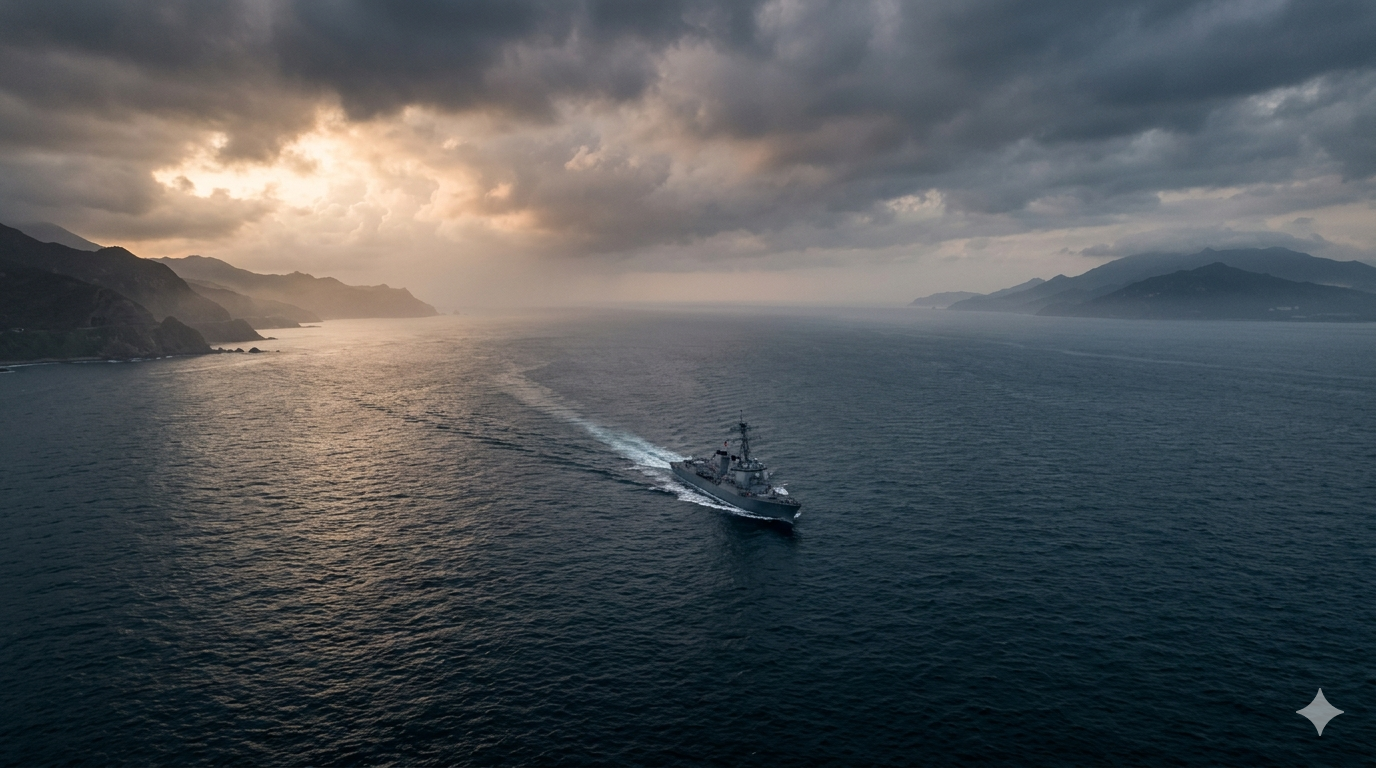
President Trump returned from a two-day summit in Beijing last week without a single substantive agreement on Taiwan, Iran, or the Strait of Hormuz. What he left behind was something far more consequential than any signed deal: a strategic ambiguity that has quietly become strategic abandonment. When asked whether Taiwan should feel more or less secure after his meetings with Xi Jinping, Trump gave one word — "Neutral." That word is now reverberating through every defense ministry in the Pacific.
The Summit That Didn't Deliver — and What That Signals
Trump arrived in Beijing with 17 of America's most powerful CEOs in tow — Tim Cook, Elon Musk, Jensen Huang, Larry Fink, the Boeing CEO — a delegation that looked less like a diplomatic mission and more like a trade delegation looking for market access. Xi placed Taiwan at the center of every conversation, calling it "the most important issue" between the two countries and warning that differences over the island could lead to outright conflict. Trump's response was to say he wants everyone to "cool down" and that he is "not looking to travel 9,500 miles to fight a war."
On the pending $14 billion arms sale to Taiwan — a package that Taipei has been waiting on for months — Trump said "I have not approved it yet. We will see what happens." He discussed it with Xi "in great detail." That detail is the tell. Arms sales to Taiwan are not supposed to require Beijing's input. The Taiwan Relations Act obligates the United States to provide Taiwan with defensive weapons. That obligation is not a negotiating chip. Treating it as one is a policy earthquake in disguise.
The Strategic Ambiguity That Is No Longer Ambiguous
For decades, American policy on Taiwan operated on a doctrine of strategic ambiguity — Washington would neither confirm nor deny whether it would militarily defend Taiwan, keeping Beijing uncertain and Taipei motivated to defend itself. That doctrine required one thing above all: that Beijing never be confident the US would stand aside. Trump's performance in Beijing has now severely damaged that foundation.
Taiwan's president responded directly, stating that only the Taiwanese people can decide their future — a pointed but careful pushback from a government that cannot afford to alienate Washington while simultaneously watching Washington signal it might not show up. China's foreign ministry called the summit "historical." Xi is now scheduled to visit the United States in the fall. Analysts who had warned that the US war in Iran was drawing American focus away from the Pacific — and creating what one professor called "the opportune moment" for China to contemplate action — are watching the post-summit landscape with renewed alarm. China remains Iran's largest trade partner and the top buyer of its oil. It has leverage on multiple fronts simultaneously. Trump left Beijing with goodwill and no commitments. Xi left with everything he needed.
Call to Action: The Pacific Ledger Is Open
Taiwan produces the semiconductors that run every device you own, every data center powering AI, and every advanced weapons system in the US arsenal. A Chinese move on Taiwan is not a distant geopolitical abstraction — it is a direct material threat to the American economy and the global technology supply chain. The ledger is open. Read it clearly.
- Demand congressional clarity on the Taiwan arms sale: The $14 billion package has been sitting in limbo while the White House negotiates its delivery with the country it is meant to deter. Call your representatives. The Taiwan Relations Act is a law, not a suggestion, and Congress has the authority to enforce it independently of executive deal-making.
- Watch the South China Sea in the coming weeks: During the Hormuz crisis, China moved to assert control over the Scarborough Shoal in the South China Sea. Xi's fall visit to Washington will be the next major pressure point. The interval between now and then is the window of maximum risk. Pay attention to naval movement reporting.
- Diversify your semiconductor supply chain awareness: Whether you run a business dependent on chips or simply own technology, understanding that over 90% of the world's most advanced semiconductors are made in Taiwan is not a political position — it is a supply chain risk you carry whether you know it or not.
V64OTD // NEUTRAL IS NOT A DEFENSE POSTURE.
[ SHARE_THIS_DISPATCH ]