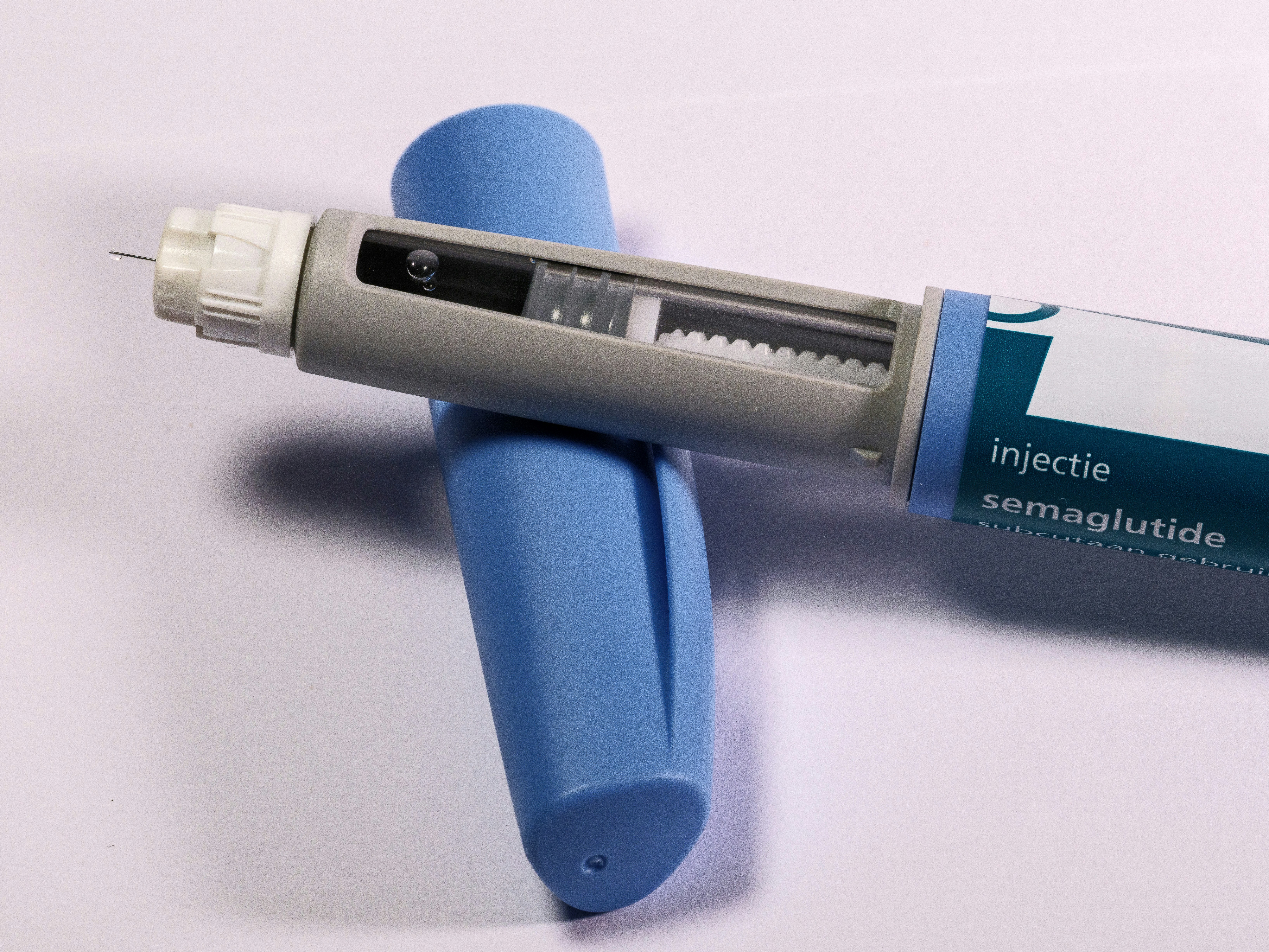

GLP-1 weight-loss coverage is collapsing in 2026 — even as the same drugs keep getting approved for the very conditions insurers do pay to treat once they show up.
GLP-1 agonist (noun) — a class of drugs (semaglutide, tirzepatide, and others) originally developed for type 2 diabetes that also produce significant weight loss. Sold under brand names including Ozempic, Wegovy, Mounjaro, Zepbound, and the newer oral pill Foundayo.
This piece contains factual reporting drawn from state regulatory data, an industry insurance tracker, and CMS's own program materials, alongside a modest amount of clearly labeled editorial framing.
What actually changed this year
If you or someone you know has a GLP-1 prescription for weight loss, there's a decent chance coverage got worse in 2026, not better — despite these drugs being more popular, more effective, and more thoroughly studied than at any point since they hit the market.
Massachusetts offers the clearest, most documented snapshot because the state's Health Policy Commission tracks it directly. Between 2025 and the first quarter of 2026, 112,000 fewer commercially insured Massachusetts residents used a GLP-1 for weight loss — a 52% drop that cut annualized spending by $662 million. That decline followed a period, from 2019 to 2025, when spending on these drugs for weight loss had been growing at an average annual rate of 99.5%. The reversal wasn't gradual. Several major plans pulled coverage for weight-loss use specifically within the same window: the state's own Group Insurance Commission, MassHealth, Blue Cross Blue Shield of Massachusetts, Point32Health, and Mass General Brigham Health Plan. Blue Cross Blue Shield of Massachusetts alone saw the share of members using a GLP-1 for weight loss fall from 6.1% in Q4 2025 to 3.7% in Q1 2026. Coverage for the same drugs used to treat diabetes was untouched.
The Massachusetts numbers are state-specific, but they track a national pattern documented independently by GoodRx's ongoing insurance-coverage tracker. As of July 2026, the number of commercially insured people with zero coverage for Zepbound rose 18% year-over-year, leaving more than 114 million people — an additional 17 million compared to 2025 — with no coverage for it. Coverage for Wegovy softened too: unrestricted access dropped from 10% of covered lives to 9%, and 27 million people still have no coverage whatsoever. Foundayo, the new oral GLP-1 pill approved by the FDA in April 2026, entered a coverage gap affecting more than 66 million people. Even Ozempic and Mounjaro — approved for diabetes, not just weight loss — saw coverage tighten, with 8 million more people losing Ozempic coverage and 102,000 more losing Mounjaro coverage. Altogether, GoodRx estimates nearly 13 million commercially insured Americans, 7% of the total, have no coverage for any GLP-1 prescribed for weight loss. And for the roughly 88% of people who do have some coverage, most still have to clear prior-authorization or step-therapy hurdles before a claim is paid.
This isn't uniform across insurers, and it isn't static. Cigna stopped covering Zepbound and Wegovy for its own employees in June 2026 — worth sitting with for a moment, since it means the company decided the drug wasn't worth covering even for the people on its own payroll. CVS Caremark, meanwhile, is set to add Zepbound back to its standard formulary in October 2026, a year after dropping it. Coverage for these drugs is less a stable policy than a moving target, and if you're on one of them, your plan's answer this month may not be its answer in six.
Why insurers are pulling back — and why it isn't really about whether the drugs work
The clinical case for GLP-1s has only strengthened. Beyond weight loss and diabetes control, the drugs have picked up FDA-recognized benefits for cardiovascular risk, chronic kidney disease, and obstructive sleep apnea. That's precisely why the retreat on weight-loss coverage specifically is worth noticing: insurers aren't disputing that the drugs work. They're disputing whether they want to pay for them at today's price, for an indication — obesity — that health plans have historically treated as a lifestyle issue rather than the chronic metabolic disease the medical establishment now recognizes it as.
The price tag is real. Gross spending on GLP-1s in Massachusetts alone topped $2.3 billion in 2025, with monthly patient cost-sharing averaging $78 for weight-loss prescriptions and $66 for diabetes prescriptions — levels the state's own Health Policy Commission says have stayed roughly stable for years even as usage exploded. But the Commission's own analysis also makes clear how much of that price is a negotiating and pricing-structure problem, not an unavoidable cost of the medication itself: if Massachusetts commercial plans paid the prices the Centers for Medicare and Medicaid Services has negotiated, statewide spending on Ozempic, Wegovy, Mounjaro, and Zepbound would be 32% lower. At the second-lowest price other wealthy countries pay for the same drugs, it would be 56% lower. At the lowest international reference price, 61% lower.
Editorial: Put plainly, American insurers are choosing to drop coverage for a drug class rather than pay U.S. list prices for it — prices this outlet's own reporting on drug-pricing and PBM practices has repeatedly shown are inflated well beyond what the same manufacturers accept from other governments. The people losing coverage aren't losing it because the drug doesn't work or because the science is unsettled. They're losing it because nobody in the supply chain — insurer, PBM, or manufacturer — has been forced to eat the difference between the U.S. list price and what everyone else pays for the identical product.
The Medicare gap: a $50 lifeline that only some Americans get
While commercial coverage was contracting, Medicare moved in the opposite direction. The Medicare GLP-1 Bridge program launched July 1, 2026, and runs through December 31, 2027, letting eligible Part D beneficiaries get Foundayo, Wegovy (injection or tablet), or Zepbound for $50 a month — a copay that doesn't even count toward the Part D deductible or annual out-of-pocket cap. CMS estimates roughly 3.8 million beneficiaries could qualify. Eligibility isn't automatic: it requires a BMI of 35 or higher, or 30-plus with a diagnosis like heart failure or uncontrolled hypertension, or 27-plus with a history of heart attack, stroke, or peripheral artery disease.
That's a genuinely useful program for the seniors who qualify. It's also a stark contrast: a 64-year-old on a commercial plan who loses weight-loss coverage this year can turn 65, enroll in Medicare, and suddenly have access to the same drug for $50 a month that her employer-sponsored plan wouldn't touch. The disease didn't change. The payer did.
There's also a case for cautious optimism on price. Massachusetts's Secretary of Health and Human Services, Kiame Mahaniah, told the Health Policy Commission in March that he'd "be really surprised if within two years, we don't see a major price crash" in GLP-1 costs, and predicted a return to broader coverage within two to three years. That's one state official's forecast, not a guarantee, but it's grounded in something real: a dozen new GLP-1 competitors are expected to reach the market by 2030, even though the current blockbuster drugs remain patent-protected until 2041.
What you can actually do right now
If you're currently prescribed a GLP-1 for weight loss: Check your plan's formulary directly rather than assuming last year's coverage still holds — plans have changed mid-year in both directions in 2026, and a call to member services takes ten minutes. If your plan added prior authorization or step-therapy requirements, ask your prescriber's office whether they handle the appeal paperwork directly; many practices now have staff who do this routinely because so many patients need it.
If you were just denied or dropped: Ask specifically whether the denial is for the weight-loss indication or the drug itself — several plans covering diabetes use of the same molecule (Ozempic, Mounjaro) still deny the weight-loss brand (Wegovy, Zepbound) of the identical compound. If you have a qualifying comorbidity (documented hypertension, sleep apnea, prediabetes, cardiovascular history), ask your doctor to code and appeal on that basis rather than weight loss alone, since coverage for those indications has held up better.
If cost is the barrier regardless of coverage, Manufacturer savings programs and pharmacy discount tools can meaningfully cut the list price for people without coverage, though they don't fix the underlying access problem. If you're turning 65 soon and living with obesity plus a qualifying condition, it's worth understanding the Medicare GLP-1 Bridge program's criteria before you enroll, since timing your Part D plan selection around it could matter.
Politically, if this bothers you as much as it should: Ask your own state's insurance regulator or health policy commission — assuming it has one, the way Massachusetts does — whether it's tracking GLP-1 coverage trends and publishing anything comparable to the HPC's data. Not every state produces this kind of public reporting, and that's a transparency gap worth asking about directly rather than assuming someone else already is.
Sources
- GBH/State House News Service: Sharp decline in GLP-1 usage in 2026 as insurance companies drop coverage
- GoodRx: Live Updates — Tracking Insurance Coverage for GIP and GLP-1 Agonists Like Zepbound and Wegovy
- CMS: Coming Soon — CMS to Provide $50 Monthly Access to GLP-1 Medications for Medicare Beneficiaries
- Medicare.gov: Fact sheet — Medicare GLP-1 Bridge: GLP-1 Drugs for $50 a Month
- AARP: Medicare $50 GLP-1 Weight Loss Bridge Program
- Reuters (via GoodRx citation): Cigna drops coverage of GLP-1 obesity drugs for its own employees
- CVS Health: CVS Caremark delivers affordability and access to GLP-1 weight management medications with expanded coverage options
- Lilly: FDA approves Lilly's Foundayo (orforglipron), the only GLP-1 pill for weight loss