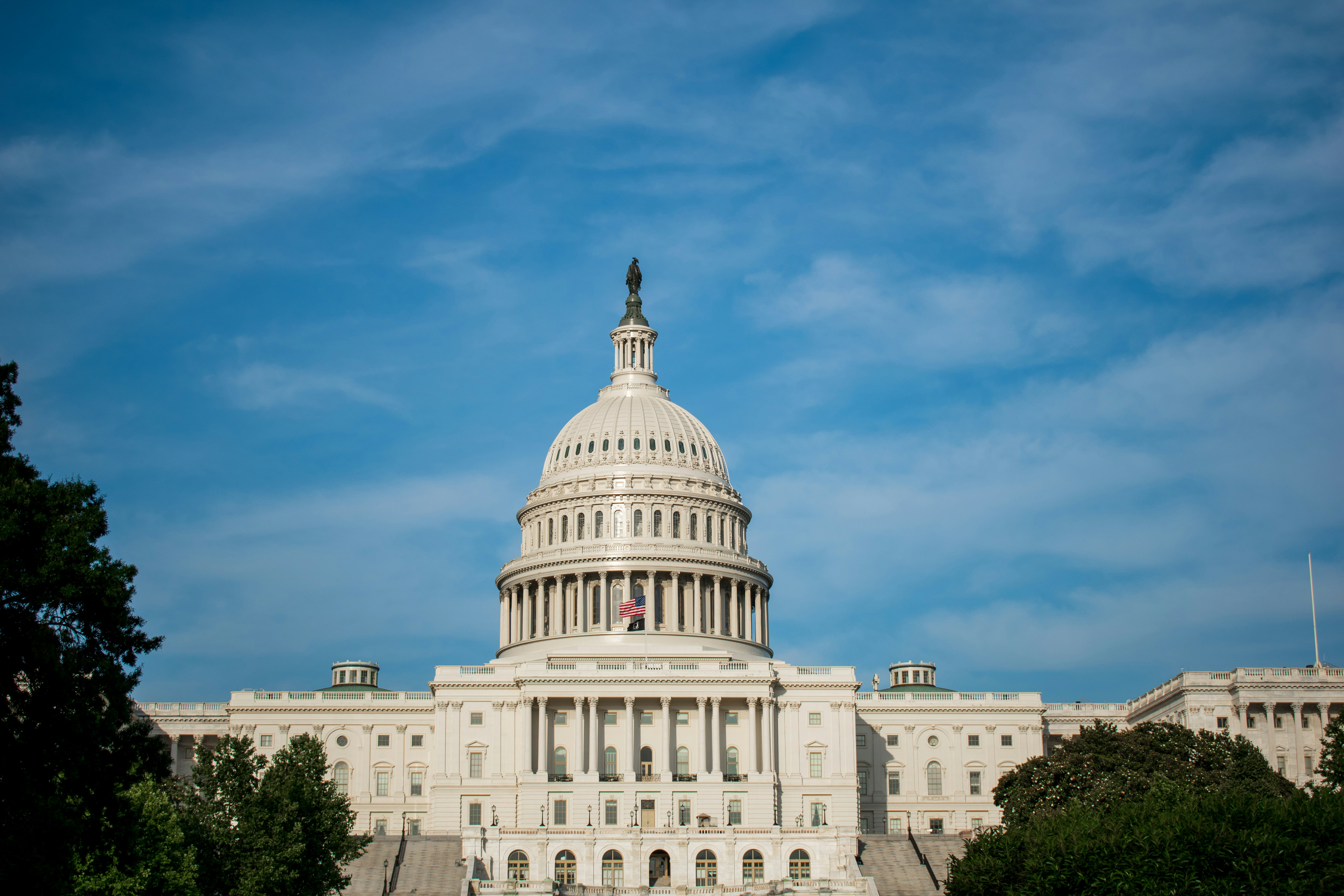

An Army soldier widely reported as Special Forces faces federal prison for making $409,881 off classified intel. Regulators are chasing $1.45 billion in suspiciously timed oil bets. The Senate banned itself from prediction markets in a single unanimous vote — and the actual bill to stop members of Congress from trading stocks on what they learn in closed briefings is stuck behind a voter-ID poison pill its own authors attached.
prediction market (noun) — an online exchange, such as Polymarket or Kalshi, where users bet real money on the outcome of future events (an election, a military strike, a court ruling) and payouts move with the perceived odds. Regulators increasingly treat them like commodities markets, which means trading on non-public information about the underlying event can be prosecuted the same way stock-market insider trading is.
The following contains editorial analysis and opinion clearly labeled as such, alongside verified reporting.
What happened
Over the past seven months, prediction markets have exposed a genuine, well-documented insider trading problem reaching from a Special Forces barracks to Wall Street trading desks. The Justice Department has filed criminal charges. The CFTC has opened a billion-dollar investigation. The House Oversight Committee launched its own probe. Kalshi has suspended and fined multiple politicians for betting on their own races.
And the Senate, watching all of this unfold, did something Washington rarely does quickly: it banned itself. In April, senators voted unanimously — no debate, no roll call, one voice vote — to bar themselves and their staff from ever placing a prediction-market bet again.
Here's the part that doesn't get the same unanimous urgency: the much larger, much older problem of members of Congress trading individual stocks while sitting on committees that regulate those very industries. That fight has been alive since at least 2012. The bill that would actually end it has been sitting in a Senate drawer for over a year. The version that passed the House had a poison pill bolted onto it by its own sponsors — practically guaranteeing it will never become law.
This is a story about what Washington moves fast to fix, and what it doesn't.
The soldier, the strikes, and the billions in suspicious bets
The Maduro case. On January 3, 2026, U.S. forces carried out a classified operation — DOJ's own indictment names it "Operation Absolute Resolve" — that led to the capture of Venezuelan leader Nicolás Maduro. Master Sergeant Gannon Ken Van Dyke, an active-duty soldier stationed at Fort Bragg who had access to classified planning for the operation, created a Polymarket account on Dec. 26, 2025, and — per DOJ's own indictment — placed roughly 13 bets totaling approximately $33,034 that Maduro would be ousted, U.S. forces would enter Venezuela, or Trump would invoke war powers, all before Jan. 31, 2026. When Maduro was captured on Jan. 3, those bets paid out approximately $409,881, per the DOJ. The Justice Department unsealed its indictment and announced the charges on April 23, 2026: three counts of violating the Commodity Exchange Act, one count of wire fraud, and one count of an unlawful monetary transaction — described in DOJ's release as arising from unlawful use of confidential government information, theft of nonpublic government information, commodities fraud, wire fraud, and an unlawful monetary transaction. He pleaded not guilty in Manhattan federal court and was released on $250,000 bond, per DefenseScoop's reporting on his court appearance. DOJ and multiple outlets have called it the first known case of insider trading on a prediction market. On his specific role: DOJ's release identifies him only as "a U.S. Army soldier," while the trade press (Special Ops Magazine, DefenseScoop, Fortune) describes him as a Special Forces member; NBC News reported that his specific duty was as a communications specialist supporting Joint Special Operations Command. We include both descriptions rather than picking one, since the DOJ's own filing doesn't specify his exact military occupational specialty.
Operation Epic Fury. On February 28, 2026, U.S. Central Command began Operation Epic Fury — the campaign against Iran. Two distinct, separately sourced findings point to suspicious trading patterns around it, and we're keeping them separate rather than combining them into a single statistic. First, broader reporting (via Yahoo Finance/Polymarket data) found that the win rate on Polymarket bets tied to military and defense events generally ran around 52%, compared with roughly 18% for most other categories on the platform — a gap consistent with, though not proof of, foreknowledge. Separately, the analytics firm Bubblemaps identified nine specific, connected Polymarket accounts — all created in the days just before the Iran bombing campaign began — that won a combined $2.4 million with a 98% win rate across more than 80 bets tied to specific war milestones (first strikes, the removal of Iran's supreme leader, the ceasefire announcement); that finding was reported by CBS News/60 Minutes, Bloomberg, and The Hill. One account going by "MAGA-my-man" reportedly won close to $600,000 betting on strike timing; as of this writing, it has not been criminally charged, unlike Van Dyke. Separately, a New York Times investigation — cited directly by the House Oversight Committee as grounds for its own probe — found more than 80 Polymarket accounts placed suspiciously timed bets across nearly 30 topics (not limited to Iran), winning over $1.4 million in the hours before the April 7 ceasefire announcement alone. And in August 2026, CNN reported that Polymarket itself proactively referred dozens of suspected military insider-trading cases to the Justice Department — worth noting as evidence the platform isn't simply stonewalling.
The oil futures billions. The larger dollar figures appeared in traditional commodity markets, not prediction markets. Traders placed roughly $500 million in oil futures about 15 minutes before the White House announced a delay in strikes on Iranian energy infrastructure on March 23. On April 7, another set of trades — roughly $950 million — bet on falling oil prices just three hours before a U.S.-Iran ceasefire was announced. Rep. Ritchie Torres (D-NY) separately flagged a $760 million trade placed minutes ahead of a Strait of Hormuz announcement. On April 15, 2026, the CFTC formally opened an investigation covering at least $1.45 billion in combined positions, requesting trader identification data from the CME Group and Intercontinental Exchange. The Justice Department is conducting a parallel probe into the same trades, per NBC News reporting.
The politicians are betting on themselves. Kalshi's own compliance team has been busy, in at least two separate enforcement waves. On April 22, 2026, Kalshi reported it had suspended and fined one U.S. Senate candidate and two House candidates for betting on races they were personally involved in (the platform's public reporting at the time did not name them). Separately, in May 2025, gubernatorial candidate Kyle Langford placed a $200 wager on his own race, with three other politicians reportedly betting on their own races as well, per the House Oversight Committee's subsequent letters to Kalshi and Polymarket. Then, on August 31, 2026, Kalshi announced a fuller round of enforcement: it suspended North Carolina House candidate Laurie Buckhout (R), the nominee challenging Rep. Don Davis, D-NC, for three years and fined her $2,500 after she admitted placing bets under $1,000 on her own race ("I bet on myself. Literally," she said, calling it "a dumb mistake"; Davis's campaign called it "a disqualifying breach of public trust"). The same day, Kalshi also suspended billionaire Stephen Cloobeck for three years over a $10,000 bet on his own since-abandoned California governor's bid, suspended former Planet Fitness president Ben Midgley over a bet on his own Maine gubernatorial run, and handed former Rep. George Santos its first-ever lifetime ban plus a $71,356 fine — though Santos's violation was different in kind: Kalshi found he misled the public about whether he'd attend President Trump's State of the Union address in order to profit on a related market, not a bet on an election he was running in.
A March 2026 survey of 1,000 U.S. adults by Verasight found nearly 70% support banning government officials from trading on prediction markets — a rare point of broad public consensus.
What Congress actually did about the part involving Congress
Here's where the story splits and directly answers whether Congress moves only when it isn't the one under the microscope.
The bill that investigates the Pentagon, not Congress. On August 20, 2026, Rep. George Whitesides (D-CA) introduced H.R. 10137, the "No Insider Trading on National Security Act of 2026," with Reps. Don Bacon (R-NE) and Seth Moulton (D-MA) as cosponsors (GovInfo's own bill record lists Whitesides as the sole sponsor, not a three-way joint introduction as some press coverage implied). It directs the Department of Defense's Inspector General to investigate insider trading in prediction and energy markets tied to Operation Epic Fury and to recommend safeguards, and it urges prediction-market platforms to police themselves more effectively. It was referred to the House Armed Services Committee. It is scoped entirely to the Pentagon and the executive branch. It says nothing about members of Congress and their own trading — because that was never its purpose. It's a genuinely useful, narrowly targeted bill. It just isn't the whole story, and treating it like Congress's answer to insider trading would be a mistake.
The Senate banned itself — fast. On April 30, 2026, the Senate passed S.Res. 708, sponsored by Sen. Bernie Moreno (R-OH), amending Rule XXXVII of the Standing Rules of the Senate to prohibit senators, Senate officers, and Senate employees from participating in prediction markets at all. It passed by unanimous consent — with an amendment from Sen. Alex Padilla (D-CA) — with no real floor fight. Credit where it's due: on this narrow question, the Senate acted with more speed and bipartisan unity than it manages on almost anything else. The House, notably, has not adopted an equivalent rule — reporting at the time suggested the House "was expected to follow," but as of this writing, it hasn't, and House members remain free to trade on prediction markets under current rules. Worth flagging: Sen. Moreno, who fast-tracked the Senate's own prediction-market ban, was also a committee member and former cosponsor of the earlier "PELOSI Act" — yet he voted against the tougher stock-trading ban described below when it came up in committee (see next section). That's not a contradiction we're accusing him of hiding; it's a documented, on-the-record vote, and it's a useful illustration of the broader pattern this Dispatch is about.
Separately, two bipartisan Senate and House bills — H.R. 7004 / S.4188, the Public Integrity in Financial Prediction Markets Act (introduced by Rep. Ritchie Torres, D-NY), and S. 4017, the End Prediction Market Corruption Act (Sens. John Curtis, R-UT; Elissa Slotkin, D-MI; Todd Young, R-IN; Adam Schiff, D-CA) — would go further and write a categorical, permanent ban on prediction-market trading by the president, vice president, and members of Congress into federal law, rather than a chamber rule that can be quietly reversed later. Unlike the Senate's own internal rule change, both bills remain in committee with no floor votes scheduled.
The stock-trading ban — the much bigger financial exposure — is where things get instructive. Prediction markets are new. Members of Congress trading individual stocks while sitting on committees that oversee those industries is not; it's been documented for well over a decade, and Congress has done nothing binding about it essentially since the STOCK Act of 2012, which requires disclosure but carries almost no real enforcement teeth. Two competing 2026 bills illustrate exactly how that inertia works:
- Rep. Bryan Steil's (R-WI) "Stop Insider Trading Act" (H.R. 7008) passed the House on July 22, 2026, 232-198, with 13 Democrats crossing over. It would bar members, spouses, and children from buying new individual stocks while in office — but it grandfathered everything they already hold, allowing them to sell existing positions with just a week's public notice. House GOP leadership attached an unrelated nationwide voter-ID mandate to the same bill. That combination all but guarantees it cannot get 60 votes in the Senate, since it forces Senate Democrats to choose between a stock-trading ban they want and a voter-ID law most of them oppose. Whether that pairing was a deliberate poison pill or simply bad legislative strategy is a matter of interpretation — but the practical effect is the same either way: a bill that could have had a real shot at bipartisan Senate passage on its own now almost certainly won't get one.
- Sen. Josh Hawley's (R-MO) original "PELOSI Act," relabeled the HONEST Act (Halting Ownership and Non-Ethical Stock Transactions Act, S. 1498) during committee negotiations with Democrats, is the tougher version: an actual ban on members of Congress — and, eventually, the president and vice president — holding or trading individual stocks at all, with 180 days to divest. It cleared the Senate Homeland Security and Governmental Affairs Committee on an 8-7 vote in July 2025. Hawley was the only Republican on the committee to vote yes; every other Republican voted no, including Sen. Bernie Moreno (R-OH) — the same senator who, nine months later, sponsored and fast-tracked the Senate's own unanimous prediction-market trading ban described above. Fourteen months after the committee vote, the HONEST Act still has not received a Senate floor vote, and GOP leadership has not scheduled one.
And the existing law barely gets enforced. The STOCK Act's 45-day disclosure deadline is routinely blown through with minimal consequence. Rep. Michael Rulli (R-OH) filed a disclosure on Aug. 7, 2026, covering 32 stock trades, 22 of them past the 45-day deadline — including a trade from Nov. 26, 2024, filed nearly 21 months late — with the late trades alone valued between $22,022 and $330,000. Rep. Julie Johnson (D-TX) disclosed 76 trades months after the deadline, valued between $76,076 and $1.14 million. Per NOTUS's tracking, Rulli is one of at least 28 U.S. House members found to have violated the STOCK Act's disclosure deadline in the past year alone, split across both parties. The typical penalty for a late filing is a small, statutorily capped fee — not a ban, not a referral for prosecution, not meaningful deterrence.
Does Congress only care about insider trading when it isn't the one doing it?
The honest answer is more nuanced than a flat yes, and worth spelling out precisely.
On prediction markets specifically, the Senate did act on itself, and it acted fast and unanimously — arguably faster than it acted on anything else in this entire saga. That's a real data point against the cynical read, and it deserves to be stated plainly rather than buried.
But that's also the easy case. A prediction-market bet is a single, visible, up-or-down wager — cheap for a senator to give up, and toxic to be caught making. Stock trading is different: it's Congress's own considerably larger financial exposure, it's been a documented problem for fourteen years, and on that question, the pattern is much closer to what a skeptical reader would expect. The House passed a watered-down version with a rider designed to sink it in the Senate. The tougher version has been parked in a Senate drawer for over a year. The one law already on the books gets treated as optional by members from both parties.
Put simply: Congress banned itself from the newest, smallest, most reputationally embarrassing form of the problem in a single afternoon. It has spent fourteen years slow-walking the oldest, largest, most financially consequential form of the same problem. A soldier facing prison for $400,000 might reasonably wonder why the rules that move fastest are the ones that cost lawmakers the least.
Three honest ways to read this
Reading one: This is a straightforward accountability failure — Congress will regulate anyone's insider trading except the version that costs its own members money, and the voter-ID rider on the Steil bill is Exhibit A.
Reading two: This is a case of institutional caution rather than bad faith — a permanent stock-trading ban is a genuinely bigger, more legally complicated change than a prediction-market betting rule, and moving carefully on it isn't automatically corrupt, even if it's frustratingly slow.
Reading three: This is Congress functioning exactly as its incentive structure predicts — individual members have little personal reason to vote away their own trading privileges, so bipartisan majorities exist for popular messaging bills but not for binding ones, regardless of which party controls which chamber.
All three can be true at once, to different degrees, for different members.
What you can actually do with this
Look up how your own representative and senators voted on H.R. 7008 (the Steil bill) and whether they're a cosponsor of Hawley's Honest Act, H.R. 7004, or S. 4017. Ask them directly whether they support decoupling the stock-trading ban from the voter-ID provision so each can be judged on its own merits. Congress.gov tracks all of these bills by number and updates them in real time.
A closing word
Editorial: A Special Forces master sergeant is facing federal prison time over roughly $34,000 in bets. Whatever the outcome of his case, the law he's charged under exists because insider trading is supposed to be illegal regardless of who does it. The same principle, applied evenly, would have produced a binding stock-trading ban for Congress years ago — not a messaging bill with a poison pill attached, and not a bill parked in committee since 2025. The Senate proved this session that Congress can act unanimously and by a single vote when it wants to. The question this Dispatch leaves standing is why that speed shows up for the cheap fix and disappears for the expensive one.
Sources
- DOJ: U.S. Soldier Charged With Using Classified Information To Profit From Prediction Market Bets (primary — full indictment details, exact dollar figures)
- DefenseScoop: Special Forces soldier released on $250K bond
- NBC News: What we know about Gannon Ken Van Dyke (communications specialist, JSOC)
- Operation Epic Fury Fact Sheet — U.S. Department of War
- Yahoo Finance/Polymarket: users stand to make millions if US troops enter Iran, raising insider trading fears (52%/18% win-rate stat)
- CBS News/60 Minutes: Suspected insider accounts net $2.4 million on Polymarket Iran war bets with 98% win rate (Bubblemaps analysis)
- CNN: Polymarket referred dozens of possible military insider trading cases to DOJ
- Oversight Committee: Comer Launches Investigation Into Insider Trading on Prediction Market Platforms (primary — cites NYT investigation, Langford case)
- Rep. Ritchie Torres: Calls on CFTC to Investigate $760 Million Oil Futures Trade
- Rep. Ritchie Torres: Calls on SEC and CFTC to Investigate $950 Million Oil Futures Trade
- Bloomberg: CFTC Investigates Suspicious Oil Trades Made Before Trump's Iran War Shifts
- NBC News: DOJ probing trades in oil futures and prediction markets just ahead of Iran war news
- CNN/ABC17/NPR/CNBC/WaPo (Aug. 31, 2026 Kalshi enforcement wave — Santos lifetime ban, Cloobeck, Midgley): Kalshi bans George Santos for life, fines Republican in key House race
- Washington Post: Kalshi suspends N.C. GOP candidate for betting on her own race
- WRAL: US House candidate banned from prediction market for insider bets
- Congress.gov CRS: Prohibiting Senators from Prediction Market Participation (IF13239)
- Congress.gov: S.Res.708 — full text, sponsor Sen. Bernie Moreno, Padilla amendment
- NBC News: Senate bans members and staff from trading on prediction markets
- GovInfo: H.R. 10137 — No Insider Trading on National Security Act of 2026 (primary — sponsor/cosponsor record)
- Congress.gov: H.R.7004 — Public Integrity in Financial Prediction Markets Act of 2026
- Sen. Curtis: Curtis, Slotkin, Young, Schiff Lead Bipartisan Bill to Stop Insider Trading from Government Officials on Prediction Markets (S. 4017)
- Congress.gov: H.R.7008 — Stop Insider Trading Act, bill text
- CNBC: House advances bill barring sitting Congress members from buying stocks
- CBS News: GOP Sen. Josh Hawley and Democrats vote to advance congressional stock trading ban (8-7 vote, Moreno votes no)
- Congress.gov: S.1498 — HONEST Act, bill text
- Roll Call: Senate panel approves bill to ban elected officials' stock trades
- NOTUS: An Ohio Congressman Violated the STOCK Act With 22 Late Disclosures (Rulli — 32 trades, 22 late)
- NOTUS: Rep. Julie Johnson Violated Transparency Law With Dozens of Late Stock Disclosures (76 late trades)
- Semafor: Polls — Voters favor federal oversight of prediction markets (Verasight poll, n=1,000, March 2026)